Happy New Year, Merry Christmas and Blessed Feast of the Holy Name! All of those greetings apply today, this particularly special day where the calendar of our culture intersects with the calendar of the church. Every year on January 1, the liturgical calendar that we follow in The Episcopal Church recognizes the Feast of Holy Name. It doesn’t always fall on a Sunday, though, so that means we often miss the opportunity during our worship together to recognize this particular celebration and its importance in the unfolding of the Christmas story. I want to start with a little bit of learning about this feast, because God’s word is always unfolding for us as our knowledge increases. Then, I want us to think about the meaning and value of names, and especially the name of Jesus, in our lives.
In Luke’s Gospel, we pick up where the Christmas story usually closes. The angels have returned to heaven; the Shepherds have shared the story of their encounter with the heavenly messengers, and Mary and Joseph following the custom of their Jewish heritage go to the Temple on the appointed day (the eighth day after birth) where the ceremonies marking entry into this child’s Jewish faith are affixed: the baby boy is circumcised in a Jewish ritual (brit milah or “bris”) marking his welcome into Jewishness with this sign of the covenant that has been set between God and God’s chosen people. As a part of that ceremony, a name is also affixed to the baby. The name given to this child has been in existence since the Angel Gabriel’s first annunciation: the name we in English say as “Jesus” which is the Hebrew Yeshua or Joshua, which we know both from our biblical stories and linguistically means “to rescue” or “to deliver.” This isn’t an unusual name for a Jewish boy, but it isn’t a family name, either. The Gospel is clear to point out that this name is the one that has come before the physical existence of the child; it is from God, as delivered through the message of the angels.
What I love about this short passage of Luke’s Gospel is that the nativity scene image isn’t frozen in time. All those who were a part of the story are continuing to live into the depths of what it has meant to experience the holy moment of that Silent Night: the Shepherds are praising and glorifying God; Joseph is caring for this child who will be brought to the Temple and welcomed into faith, family and tradition. And Mary is pondering the meaning of all of these things and holding them in her heart. Today, a name is placed on this child, not just any name but a name given from heaven. Here, heaven meets human in all of these things, all of them. The Word becomes Flesh, and even in the rending of human flesh, a heavenly covenant is made known.
We don’t always focus on the human nature of Jesus, but these weeks just post Christmas are filled with them: a baby born in a stable, without home and in the poverty of human existence; the baby’s very human flesh being marked in the ritual of circumcision and then given a human name. Jesus was, after all, a human baby who did all of the growing and crying and developing that human infants do. It isn’t all pretty. At times, as the new parents in this room can attest, it is all pretty messy and smelly and relentless. Aspects of this fleshy humanness in the story make us cringe. In our Christianity, we have too often sanitized the Christmas story and the fleshy, humanness of Jesus’ whole existence on this earth. But this life was the real life that happened in the days, weeks, months and early years of Jesus’ life. It was full of beautiful, messy human, family life with a newborn baby.
It might go without saying, but I’m going to say it anyhow: these attributes of being fully human are not in opposition to God. Fully integrating Jesus’ humanness into the narrative of our salvation doesn’t make Jesus less pure or less holy or any less fully God. These brief glimpses we have in our Holy Scriptures of Jesus’ infancy and childhood remind us of the ordinary, human miracle of the ways our bodies, minds, and souls develop beautifully, evolving in ways that are magnificent with the support and loving care from those who care for us. We are beautifully and wonderfully made, created and loved by God. And so, too, Jesus the newly named baby was beautifully and wonderfully made, raised and cared for in body, taught how to be a human being with an inquiring and discerning mind, and shaped in the faith of his ancestors in Jewish faith, tradition and spiritual practice. Next week, we will celebrate Epiphany on January 6 and the Baptism of Jesus on the First Sunday after the Epiphany, which are also beautifully human and fully divine reminders of Jesus’ early life and ministry. But it all began with the faithful walk of faithful people, his human parents Mary and Joseph, who offered thanks to God for the gift that was and is from God and gave him the holy name of Jesus.
So, what is in that holy name for us?
I want you to take a moment, right now. Take a deep breath and think about a time that you reached out in prayer in the name of Jesus. Maybe something was happening in your life that was overwhelming. Maybe you were scared, or a family member was sick or suffering. Imagine that time, when you called out for Jesus.
Maybe even take a moment now, and as you feel led, speak that Holy Name with the same deep longing that you spoke it then.
[silence]
This is a place filled with the presence of Jesus. So, I want you to do one more thing. I want you to take a moment and think about your own name. Whatever it is for you: the name you were given at birth, the name you’ve claimed for yourself, the name with which you identity.
I know, for each one of you, there is someone who speaks that name in a way that hits your heart in just the right way. Maybe it was your mother, your father, your grand-mother or grand-father. Or a child, a friend, a spouse, a lover: someone who really knows you and when they speak your name, you feel it.
I want you to hear that name. Listen to what it sounds like. Savor it.
[silence]
That holy name you hear is the name that Jesus calls you, just as you call out the Holy Name of Jesus. You, each one of you, are known of God, and beloved by God. You are known by name, and you are loved by name.
The Holy Name of Jesus matters when we speak it with love, when we utter it with recognition of the presence of Jesus in our lives, when we recognize the holy name that also marks us as beloved children of God, followers of Jesus Christ.
So, on this feast of the Holy Name on this Sunday after Christmas at the start of this New Year 2023, I urge you to carry the Holy Name with you not only through the rest of this season, but in all the days beyond. The work of Christmas doesn’t end. I’m going to close with a poem by Howard Thurman that might be familiar to you, reminding us that through all our days, it is the Holy Name of Jesus who speaks our name, inviting us to the work that we need to do, in Jesus’ name, throughout this world in which we live:
The Work of Christmas
When the song of the angels is stilled, When the star in the sky is gone, When the kings and princes are home, When the shepherds are back with their flock, The work of Christmas begins: To find the lost, To heal the broken, To feed the hungry, To release the prisoner, To rebuild the nations, To bring peace among others, To make music in the heart.
Homily for Christmas Day, Year A St. Mark’s Episcopal Church
Merry Christmas!
You all know me: I’m an academic, a social worker, a writer, a musician, a priest and a preacher. So, there is nothing about me that doesn’t love words. My Dad was fond of telling a story about me as a preschooler and destined-to-be-social-worker: one day, my parents had stealthily gotten me into the car for a ride not knowing we were going…only for me to find out that it was to the doctor’s for some required immunizations. When we pulled up in front of the office and I was supposed to get out of the car, I barricaded myself inside and through my tears of fear cried out, “Can’t we just talk about this???!!” Sarah, in all of her vocational paths, has never been accused of not use her words. Too many words, possibly. But words hold meaning for me.
When we reach this lesson from Gospel according to John, usually on this Christmas Day, I get excited. I recognize that not everyone has the same love of the fourth Gospel or finds these words as exciting as the angelic choirs of the heavenly host, or shepherds watching their flocks by night. And I’ll admit, a Christmas Pageant based on the text from John wouldn’t be quite so adorable. So, I’m going to read the words of my favorite verse of this Christmas Gospel again in a few different ways, so you can hear a translation that resonates with you. Here it is first from our Lectionary, using the NRSV:
And the Word became flesh and lived among us, and we have seen his glory, the glory as of a father’s only son, full of grace and truth. (John 1:14, NRSV)
Or, perhaps you like sound of the King James Version:
And the Word was made flesh, and dwelt among us, (and we beheld his glory, the glory as of the only begotten of the Father,) full of grace and truth. (John 1:14, KJV)
Or perhaps what resonates more is the paraphrase by Eugene Peterson in The Message:
The Word became flesh and blood, and moved into the neighborhood. We saw the glory with our own eyes, the one-of-a-kind glory, like Father, like Son, Generous inside and out, true from start to finish. (John 1:14, The Message)
The words of Christmas declaring that Jesus Christ is born are holy words, and the Incarnate Word coming to dwell with us in this world is a holy and awe-inspiring gift. It’s the Gift behind all of our gift-giving; the Joy inspiring all of our festivities; the Love that is the foundation for our love of one another. The Word is living among us, dwelling with us, and yes…has moved into the neighborhood! Riding the Pulse, walking down Arthur Ashe Boulevard, browsing through the VMFA, sheltering under the I-95 overpass. All of those places. The Word has moved in with us, through the ins and out of our days, and that is true whether we are home owners, renters, couch-surfers or living in a tent. The Word, beloved as an only child, has come to be with us. And we get to experience the Word that is God, filled with grace and truth.
It’s those two words that are standing out for me this year: Grace and Truth.
I’ve already confessed to being a word nerd, so no surprise that I needed to read those words not only in three translations, but also in context of their original language, which was Greek. Grace, “χάρις” a quality of generosity and loving-kindness, extending favor beyond that which is expected or deserved. It tips in favor of the recipient, and is freely extended without expectation or coercion. And Truth, “ἀλήθεια” which speaks to truth not merely as the presence of fact (or the absence of lies), but as holding a quality of essential, non-evasive reality being handed down existentially and therefore, knowable humanly. In ancient Greece, this was the “truth” to which Homer aspired and of which Plato spoke of as the essential meaning of all philosophy.
Let me connect those two words with another important word: AND
The writer of the fourth Gospel that we call John, and the followers of the Johanine community, had experienced this Grace, and had come to know this Truth. This opening narrative is a creation narrative, one of a new creation ushered in through the incarnation of Jesus Christ. It tells the Christmas story as one of truth and grace:
Jesus, whose birth ushers in a new divine reality, is present with us in a way which lavishes undeserved loving kindness AND does so unambiguously and with certainty.
The words of this Gospel text may be poetic, but they are not intended as metaphor or illusion. They were written to convey a gift of truth that had become known to those living them out in the experience of community. The gifts of Grace and Truth born of God are the realities of our lives as followers of Jesus Christ.
My hope and prayer is that you will leave this place today with these gifts being as real for you as the packages under your tree or in your stocking. My hope and prayer is that in these days where disinformation, half-truths, ideological panderings, and “spin” fill us with confusion and division, that you will receive the fullness of the essential truth of God’s profound Love made human in the person of Jesus Christ. My hope and prayer for you is that you don’t spend your days worried about your worthiness, or your nights anxious about what is to come and instead, receive the Grace upon Grace, lavished upon you with loving-kindness which is real, and present, and a gift none of us could ever deserve. And yet, it is given from the heart of God to all of us. And my hope and prayer for us throughout this Christmas season is that we come to understand this Love as the source of the good news of salvation which has come for all people and continues to be made known to us, and in us, and through us for all the world to see.
Joy to the World and Go Tell in on the Mountain friends: The Word dwells with us and Jesus Christ is born!
God, through your infinite Love the Word became flesh, breathing a new song of joy and praise into the world. Grant that we may speak the good news of your salvation filled with grace and truth, proclaiming your promise of peace to the ends of the earth. Amen.
Friends at St. Peter’s, it is always a joy to worship with you. I have the daunting task of preaching the Sunday after you all were inspired by what I know was a good word from Presiding Bishop Michael Curry. If you came here expecting him, I know I’m going to disappoint. But I have good news: even though Bishop Curry might not be there, the Good News is here, and the transforming power of Love is here. And all we have to do is bring ourselves with open hearts, and the God who is Love will meet us here. So, we have all that we need to be present together and see how the Holy Spirit is moving in our midst.
As the Collect of the day says: Stir up your power, O Lord, and with great might come among us.
These days of Advent are moving on quickly, and today we light a rose-colored candle and embrace a moment to “Rejoice” which is what the traditional name for this day means: Gaudete, the Third Sunday in Advent. On this day, we are given the gift of reading together Mary’s rejoicing in the song of praise that we call the Magnificat: My soul proclaims the greatness of the Lord, and my spirit rejoices in God my Savior.
I cannot be Bishop Curry. But I am a woman who has held expectation in my heart and in my body even when uncertainty was all around me. I’m guessing some of you have, too. If you are also someone who has caught a glimpse of that, this Sunday is especially for you. I’m going to ask all of us to step vicariously into Mary’s rejoicing today, because I believe it holds a special and beautiful resonance for how it is that our spirits rejoice, in spite of all evidence to the contrary in the world around us..
What do we know about Mary, this woman who raises her voice to God in praise so moving that the words have carried across generations? We know a few things about her person: she is young; she is set to be married to Joseph (sneak preview: next week’s Gospel lesson features his story!), she traces her ancestry in the long line of the house of David and the relational covenant between God and Israel. And, she is presently in precarious circumstances. She has been promised in marriage, and she is in a society where her freedom and livelihood are tied to family, not to person. She is moving from the care of her household of origin, to the care of the household of Joseph. And, she now has the blessing and overwhelming challenge of learning that she’s going to give birth to a child when all human reality points to that being impossible or under circumstances that would be immoral. She is at the mercy of the family of her betrothed. She could find herself house-less, spouse-less, and cast out from society in the same breath with which she is singing her praises to God.
But Mary is a woman of God, who sources her strength in the faith of her tradition. She has willingly opened herself to God, and her participation in something greater than she is, and her spirit rejoices. What pours forth from her is not just a song of praise, it is a song of liberation. Mary’s Magnificat is her awareness not of her own strength or of the world’s limitations, but of God’s ability to work in and through her to achieve more than she ever could on her own.
In the Magnificat, Mary makes her proclamation in full awareness that she is an agent of and participant in God’s plan of salvation, and simultaneously she herself is not responsible for bringing about God’’s plan. What is asked of Mary is what is asked of us: our active and willing participation in God’s plan, which is always bigger, better and greater than any plan we ourselves could put into place.
I want to invite you to walk with me into Mary’s earnest and brave proclamation of rejoicing.
God has mercy on those who fear him in every generation.
God has shown the strength of his arm, he has scattered the proud in their conceit.
Mary knows that she is not alone in God’s favor; she stands in a long line of women and men who have heard the voice of God and followed it, not out of blind obedience but out of deep and abiding love. The stories of her people are filled with the reminders of God’s presence, and the ways in which those who are lowly are lifted up and those who prevail do so from a strength and power that belongs to God. Mary speaks this with knowledge of God’s steadfast love and the belief that God’s mercy will prevail because her life and that of her people are living proof of God’s mercy and strength.
God has cast down the mighty from their thrones, and has lifted up the lowly.
God has filled the hungry with good things, and the rich he has sent away empty.
Mary can see, know, believe and live with fullness of her own life and her willing commitment that she has been invited to be a part of God’s plan of salvation for all people. Mary lives not in her lowliness, but in the ways that she is lifted up in God’s strength into the recognition that this “Upside Down Kingdom” has been, is currently, and will continue to come to pass. God has, though all creation, found ways to lift and center the voices of the lowly. God has, throughout the history of covenant and relationship, found ways to provide the food and nourishment and daily bread for all of God’s people, and to send away those who reap their rewards on earth while ignoring their fellow human beings. God sides with the poor and the oppressed; it is evident in her life and we know that it will also be evident even in the birth of Jesus in the midst of cows, donkeys and all the worldly stench of farm life which was transformed into a place of heavenly grace. I believe Mary held all of these things and treasured them in her heart, too.
God has come to the help of his servant Israel, for he has remembered his promise of mercy,
The promise he made to our fathers, to Abraham and his children for ever.
Mary knows, in her body and mind and spirit, that God has been persistent in a covenant of love and mercy with Israel. That promise that has been made is both beyond her, and also intimately, about her. She is a child of Abraham. She knows this truth generationally, and carries it in her lineage, literally written on her heart, perhaps as we can even say today in the genetic code of her lineage as well as in the teaching of her culture. Historian and womanist theologian Wil Gafney, in her translation of this portion of the Magnificat from Luke’s Gospel, offers up this paraphrase of Mary’s praise: “God has helped God’s servant, in our faithfulness and in our faithlessness. God has been faithful. In our history, in our memories, in our scriptures, God has been faithful and it is enough.”
It is enough.
I mean, that’s really it, isn’t it? What Mary brings is her self, her consent and full participation in this plan, her groundedness in history and tradition that gave her the confidence to say YES with rejoicing. What she brings is enough. Who she is is enough.
Who we are is enough, too, when we open our hearts and participate fully in the plan of salvation that God continues to unfold for this whole, entire, crazy, beautiful world. God doesn’t ask us to be perfect, or even extra-special, or to hold an elevated place in society or any recognition, really, on the world’s terms. God asks us to bring ourselves: body, mind and spirit into full participation in a world as God has envisioned it and where our life is also written into the loving plan of salvation God has for all of God’s people.
It is enough.
This, my friends is Good News indeed. We are the ones that our God has invited to participate as well in this inbreaking of incarnate Love that has come for all the world. And we are enough, God working through us. We are enough.
Rejoice, Rejoice. “My soul proclaims the greatness of the Lord, and my spirit rejoices in God my savior”
We are enough. And God is indeed with us and in us today.
Homily for the Second Sunday in Advent Grace and Holy Trinity Episcopal Church December 4, 2022
It’s good to be back in the space with all of you; I can’t help reflecting on the time that I spent here first as seminarian and then when I was serving as a deacon. You all then launched me as a priest, and now I’m working with the Episcopal Diocese of Virginia, supporting all of those who are preparing for Holy Orders in my role as the Vocational Development Minister. I find myself saying something to those who are preparing for ordained ministry that I often felt while I was discerning and forming in this call: that season of preparation can feel like a very long Advent. That isn’t a bad thing! It attests to the way in which we are emptied, exposed to new ideas, formed and reformed, awaiting something new. As we prepare for the season of the incarnation in the Church, we’re doing the same thing: the vast transcendence of God becomes immanent, real, tangible for us in human form. The words of the prophets speak of this great mystery and divine intervention, the magnitude of which humanity has been longing for. Prophets like Isaiah give us visions of a world in which we hope to live but that is yet to come. Advent immerses us into the prophets who reveal the past, present and future of God’s vision for God’s people.
Prophets reveal what we need to hear, not just what we want to hear. Prophets rise up when difficult truths need to be spoken; prophets speak those truths to those who need to be shaken out of complacency; prophets offer us an opportunity to crack open the status quo and move into alignment with a new way of being. This realignment is all about relationship: the desire God has to be in relationship with God’s people, and the desire we have to realign ourselves with God’s vision for us. We need the prophets: today, not just in history. There are areas of our lives and in this world that need the light to shine into the darkness so that the darkness does not overcome.
In our Gospel lesson today, John the Baptist is speaking with those gathered to be baptized with water for repentance. John was preaching the Good News of the coming of Jesus, “who will baptize you with the Holy Spirit and fire.” John was a prophet in the long lineage of prophets in the Hebrew tradition; like the prophet Isaiah, he stood in the precarity of preaching hope and repentance to a yearning people. John’s voice called out not only in the wilderness of Judea, but in the wilderness of people’s lives: exhaustion, occupation, political and cultural marginalization of the people of the temple living under the reign of the roman empire.
The Holy Spirit in Judaic tradition is the source of Divine Wisdom and Prophecy, present across time with God, moving across the waters of creation. John speaks of Jesus as the one who comes after, who will baptize with the Holy Spirit and with fire. Think of that combination: the holy fire that purges away the impurities, the holy spirit who creates and renews. We think of John as a lone wolf of sorts, out there like a wild man in the wilderness. But, John stands in the lineage of the prophetic tradition of the Hebrew people, inviting them to readiness for the one who is to come on whom the Holy Spirit will rest. He does this as a prophet, not as a poet. John is helping those who have gathered for a baptism of repentance prepare their hearts instead of building up expectations in their minds. John, like Isaiah, has a divine and necessary message to deliver which requires open hearts to receive.
Isaiah began this foretelling, and today our first lesson invites us into that space through images that seem contradictory: wolves and lambs living together; calves and lions grazing together. I’m taken in by these words of Isaiah, because while the images are beautiful, they run so counter to the ways in which we logically operate. Why not just keep the wolves and the lambs in their respective places and keep the kids playing on the playground instead of over snake holes? Our logical brains tell us that this doesn’t make sense. It isn’t what our eyes see, or our ears hear. It’s just not how we do things.
Our prophets speak across time: God who is Wisdom says, there is another vision of creation.
When our Advent season comes around each year, we find ourselves faced with a choice: do we move through this season in business as usual mode, assured that we know the story and are ready to celebrate the magic of Christmas? Or, do we open our hearts to the prophets who tell us that maybe we don’t know everything that we think we do about what it means for God’s love to so profoundly infuse this world that God’s own self, in the Person of Jesus, would come to join with us as one of us, to show us a glimpse of the world that could be?
As I’ve been preparing this homily and our adult forum today, I’ve been thinking about the Advent moments that I’ve had in this space. There were ones that you might expect, of beautiful music and the delight and wonder of our children. There were also Advent moments that caught me completely off guard. It turns out that I wrote about one of them in an Ember Day letter, the quarterly journal of our formation that those who are preparing for ordination write to their Bishop. I’m going to read you a piece of my Advent Ember letter, from December 2016, while I was serving as a seminarian here. I was aware that I was learning, but it is only in retrospect that I can see a glimpse of the incredible transformation that was taking place;
Context: I had a cold, and was very worried that my lack of voice was going to keep me from being able to cantor the Magnificat on Sunday.
When I sat down to Morning Prayer today and we began to pray the Magnificat, I had an image of Kate come to my mind. Kate is a Red Door regular who has been homeless for several months; she also has a cold, perhaps even the source of my own. She greeted me with a big hug on Friday all the while coughing and sneezing, but telling me about how she was finally starting to feel better after several days of having to sleep outside in the rain when her tent was leaking until she could access some safety pins and duct tape to fix it, and then telling me how grateful she was for the extra-warm sleeping bag she had been given here and other warm items helping her through this unsheltered time in her life. We sat, and talked, and prayed as we do most weeks; her story is complex and filled with personal disappointments and system failures. She listens intently at every Friday noon-day service and her voice always comes through in the litany of prayers; I can watch her face as the Gospel breaks open when I am preaching and it changes both of us. She told me today that to her I was pastor first and social worker as an afterthought…it made me realize that it is all blending together for me, as happens more and more. I’m grateful to her for telling me that. Her gratitude for what she has seems disproportionate for how little she has, at least on the world’s terms. Her weekly faithfulness challenges me to move beyond simply trying to fix or fulfill basic needs, and instead to be present, patient and persistent in prayers, support, and the love of Christ. I know she prays for me, just as I pray for her. It is Kate’s face that I saw today as the words of Mary’s song echoed in my ears: “My soul proclaims the greatness of the Lord, my spirit rejoices in you, O God my Savior, for you have looked with favor on your lowly servant.”
Just like Kate’s depth of gratitude in a living situation that seems unfathomable to many of us, Jesus’ life and teaching often don’t make sense to us in rational terms: the last will be first; the meek will inherit the earth; those who lose their lives will find them; those we think we are serving reveal to us the face of Christ. It’s humbling and vulnerable to open ourselves to a world turned upside down where God is revealed so profoundly apart from the structures of power, wealth and opportunity that we have come to believe are the signs of God’s favor because we live in a society that values those creature comforts. Advent reminds us that our vision is more limited than God’s vision: God’s favor rests with all of us, word made flesh in the person of Jesus Christ.
Isaiah the prophet speaks of the fullness of this divine vision he has seen revealed in the celestial temple; John the prophet tells the people to prepare for the one who is to come; the Epistle to the Romans speaks to the new hope in Christ that unites us and brings us to live in harmony with one another so that with one voice we may glorify God. Truly living out this Advent hope in all of its revelations means that we begin to see a world that makes no logical sense but is filled with heavenly grace. It means that we delight when the lion and lamb are living in a peaceable kingdom, and when those who we would least expect to show up as Christ in our lives suddenly appear, melting our preconceived notions about where we find Jesus in today’s world. These unpredictable moments, these inbreakings of divine paradox renew our understanding and wisdom to glimpse the world and each other as God sees us.
So, while I’m here with you today in this holy space and community that has shaped and formed me, I wish each of you Advent moments that surprise and delight you. I challenge you to open your hearts to the ways in which God is being revealed to you in the unlikely people and places that you encounter. And, I pray for you and for all us to be the conduits of divine love and grace that speak with Advent hope through all the corners of this world.
All-powerful God, increase our strength of will for doing good that Christ may find an eager welcome at his coming and call us to his side in the kingdom of heaven, where he lives and reigns with you and the Holy Spirit one God, forever and ever. Amen.
This Advent season, I have been studying and listening to the Prophets. The time in which these prophecies were written seems ancient and also, just like today. Wars rage; rulers are tyrants; people are suffering. And yet, in the words of the Prophets, the vast transcendence of God becomes immanent, real, tangible for us in our human condition as we long for a complete change in the social order. The prophets, like Isaiah, give us visions of a world which we hope for, but that is yet to come.
That world seemed far away to the people for whom Isaiah was writing. That world still seems far away to us, with mass shootings and ideological polarization, and the widening gap of income inequality which leaves the rich, richer and the poor, poorer. We, like those of Isaiah’s time, are also crying out, “How long, O Lord, how long?”
We may look to the prophets to soothe our souls. But prophets reveal what we need to hear, not what we want to hear. That’s always been the conundrum of the prophet.
We enter into our Christian heritage through the prophetic imagery of the Hebrew people. Israel was a nation chosen by God for relationship; through that relationship God would be revealed to all people. When God’s chosen people fell away from the Covenant that bound them together with God, the prophets called it out and invited repentance so that there could be reconciliation: restoration of the divine-human relationship. Abraham Joseph Heschel puts it this way, “[Prophets] had to remind the people that chosenness must not be mistaken as divine favoritism or immunity from chastisement, but, on the contrary, that it meant being more seriously exposed to divine judgment and chastisement.”
No one likes to be chastised, neither children nor adults. But this re-alignment of our thinking beyond our own desires brings us into open-hearted readiness for divine love and grace.
Prophets rise up when difficult truths need to be spoken; prophets speak those truths to those who need to be shaken out of complacency; prophets offer us an opportunity to crack open the status quo and move into alignment with a new way of being. We need the prophets: today, not just in history. They speak hard truths, and invite us to align our lives with God’s vision so that we can fully experience the Good News which is for all people.
Our Advent lessons from the prophet Isaiah remind us that we are living into this season of expectation not just for our own well-being, but for the betterment of the world God envisions for all of God’s people. We…each of us and all of us…are the instruments through which God’s transcendent love is made imminently known in a world that so desperately needs it. We catch a glimpse of that longed-for world in today’s lesson:
“He shall judge between the nations, and shall arbitrate for many peoples;
they shall beat their swords into ploughshares, and their spears into pruning-hooks;
nation shall not lift up sword against nation, neither shall they learn war any more.”
-Isaiah 2:4
Friends, that is a prophetic vision that I can get behind. The world in which we live is filled with war and violence. Gun violence and mass shootings every day in the United States, wars and conflict in Ukraine, Ethiopia and Yemen. Humanitarian crises in Afghanistan, Myanmar, Taiwan, Iran…not to mention COVID-19 and our global climate emergency. We are in a state of agitation and unrest, distrust and disruption are always the leading news. We learn war as a strategy and as a way to order history in this country and throughout the world.
What would it mean for us if we didn’t learn war anymore. What would that even look like? Not learning how to play games that “one up” one another. Unlearning conflict as a way of life.
I’m wearing a pendant today that was a gift from a doctoral advisee named Lisa. Lisa worked as a social worker for military families and understood from all her training and experience how war and trauma were interconnected in ways that shaped everything about her life, her family and all of those around her. Through her, I came to understand the impacts of war on soldiers, on families, on communities in ways that transformed the depth of my experience. My intellectual knowledge of war evolved to an empathic understanding of the magnitude of the effects of war on our humanity. We spoke often about spirituality as a grounding force in the midst of so much pain. When Lisa graduated, she gave me this pendant, a labyrinth, something that held special significance in my spiritual life. It was a very symbolic gift.
This lovely pendant reminds me of my time working with Lisa, but its story extends far beyond that mentorship. You see, this lovely pendant she chose for me used to be part of a nuclear weapon system. It is heavy; I feel its weight whenever I wear it. The copper that was used to make this bronze alloy necklace was part of the American nuclear arsenal contained in an underground bunker in Missouri, where I once lived and completed my doctoral studies. This metal, specifically, was part of a weapon system designed to carry launch signals to Minuteman III Intercontinental Ballistic Nuclear Missiles at the U.S. missile site in Grand Forks, North Dakota.
During the 1980’s, the slow process of decommissioning and disarming nuclear weapon systems began. I remember the time, the political debate, the tension. And even as I remember all of that, I feel in the weight of this pendant that the metal I wear around my neck could have been part of a missile system that detonated nuclear weapons and ended countless lives. It speaks to me of possibility and reality: of the continual walk that we are making in this world which can turn toward war or turn toward peace. Wearing it makes me ask: is conflict worth it? Is there a way through whatever we are going through that will lead to peace, not war?
We haven’t yet experienced the fullness of this vision Isaiah foretold. We continue to harbor war in our hearts, even those of us who want to think of war as the “last resort.” What if it isn’t? What if God’s reign of peace is our final destination? Can we envision our lives together in that re-cast vision of God’s plan for us? Can we feel the weight of it in our bones?
We continue to live into the “now and not yet” of the words of the prophet Isaiah. Even in our celebrations this holy season, have we fully taken in these prophetic words and images from centuries before Jesus’ birth? We are still learning war as a means to survival, a means to an end. And the Good News that our lessons from the prophet Isaiah in this season of Advent offer us is that war is not the end of the vision that God has for God’s people. There is a divine vision beyond our human divisions where there is no need to learn war. Where we are disarmed of the capacities for destruction. Where our greed, our lust for power, our desires for control are not the end of story. Where there is a divine God-ness that amalgamates our differences and makes us into something new. It means we are not what we once were, headed on paths of destruction. It means we are something new, remade, and repurposed..
Perhaps the opposite of war isn’t peace. Perhaps it is grace.
The world in the days that Isaiah foretold was expecting a great and powerful leader who would crush and vanquish the enemy. The world received a tiny, vulnerable infant who taught us to love those who hate and persecute us, who healed those who were outcast and who gave blessings to the poor, the hungry, and the meek. Have we truly opened ourselves to receive that grace? We turn to this cycle of renewed openness, preparing ourselves to receive the gift of the incarnation every year, and my hope is that this year we can pause, and pray and truly learn to open into that gift more fully. It is a gift, at times beyond our capacity to comprehend.
In the Good News of today’s Gospel, Jesus invites his disciples into a different vision where it isn’t the planful, methodical, controlling efforts of our lives that bring about God’s reign. Instead, it is the preparation of our hearts, the openness to God’s transformation of our lives and of our world. We are asked to be ready, to open our eyes to a vision of how God sees us. Our belovedness to God doesn’t inoculate us; it calls us to repent of the wars, the conflicts, the enmity that may be a part of our lives in this world, but that aren’t part of the divine vision for God’s people. It calls us to turn our hearts and our vision to God alone, walking each step of this life with an awareness that the center to which we are drawn is the heart of a loving God, even if our path meanders toward and away from that vision. The path always leads home. And that home was made ready for us in the incarnation of Jesus Christ.
As you open into this season of Advent, be ready for God’s vision to surprise you.
Be ready, says Jesus, for the unexpected hour when God’s vision is made known in your life.
Be ready to be repurposed; be ready with each and every step you take.
While I recognize that some of you are already scratching your heads about the meaning and purpose of today’s Gospel lesson, I’m going to ask your indulgence of going just a little further and hearing the next two verses of Luke’s Gospel:
When the Pharisees, who were lovers of money heard all this, they ridiculed him. So Jesus said to them, “You are those who justify yourselves in the sight of others, but God knows your hearts, for what is prized by humans is an abomination in the sight of God.
Today we get to wrestle together with a tough text: this seemingly strange teaching of Jesus which, on the surface seems to praise a shrewd and unjust manager who finds a way to “one-up” his rich boss by doing some discount deal-cutting with a few extended credit customers before he finds himself out of a job. That’s all in there. But it isn’t the full story.
If we listen with our hearts (and minds) open, we begin to recognize that this story is part of a theme that weaves throughout the teaching and example of Jesus’ ministry. Jesus repeatedly reminds us in word and deed that the way things are in God’s realm runs counter-intuitive to our human nature. As Jesus says repeatedly, “my kingdom is not of this world.”
But time and again, we hear the Word and then we live in the world. And sometimes there is profound dissonance between the two. We don’t need to look any further than today’s lesson which deals with the nature of debt and forgiveness: kind of a hot topic in 2022 as well. Jesus didn’t create the dissonance, nor do we. In parables like this, it just becomes obvious.
I think the dissonance begins with the parable of the prodigal son, actually, which comes immediately before today’s lesson if you’re reading the Gospel according to Luke from start to finish. Our lectionary moves that story into Lent, but I think that loses the flow of what Jesus is doing in this series of teachings. Most of you probably know the story of the prodigal son: there’s two brothers, one of whom stays home dutifully to help the father run the family farm, and the other asks for his inheritance, then goes off to the city and squanders it. After a dark night of the soul, he decides to return even as a servant, since the servants had it better off than he did. When he returns, his father welcomes him with open arms and throws a huge party in his honor. If we read it from the perspective of the lost son returning, it’s all about undeserved, lavish grace and forgiveness. We might feel some righteous indignation if we enter the parable from the perspective of the hard-working, loyal son who feels that dissonance when the prodigal is so generously welcomed after squandering his share of the family fortune, which means there’s less to go around for the stalwart sibling. If you went to the Whistler to Cassatt exhibit recently at the VMFA, you might have noticed Henry Mosler’s “The Return of the Prodigal Son” (1879) where the errant son comes home too late, and he is depicted, weeping, at his father’ death bed. That work of art was a cultural interpretation: a morality tale that re-cast the ending of the biblical story of the Prodigal Son in a way that aligned with the cultural values of hard work and reward, rather than ridiculously lavish grace and forgiveness.
In what image do we see God?
And so we find ourselves back in the dissonance of today’s lesson. The shrewd manager ends up getting praised by his rich boss for finding a way to act even more shrewdly with those who owed the master money. Both the rich boss and the manager know how the world works: through cutting deals that make other people feel like they got the better end of the bargain, it will look good on them. Jesus embraces the dissonance to point out the strategy within these human relationships which makes it clear how the world works.
If that’s our game, then those are the rules. Following those rules has its human reward, and its consequences: the manager is still out of a job, and the people who seem to be his friends may turn around and be just as shrewd with him at some point. That’s how the game is played.
But what if that’s not our game. What if our game looks like the utterly ridiculous notion of forgiving someone who has squandered everything? What if our game looks like seeing the face of Christ in someone sitting on a park bench with their belongings shoved into plastic bags? What if our game is getting out of the rat race we’re socialized to think about as “the road to success” and instead making decisions about how we see the wealth and earnings entrusted to us as having a role in the betterment of humanity as God sees us all, rather than our own selfish struggle to beat others to the finish line where the one with the most toys wins?
We might look like ridiculous children of light. We might seem soft, in a world full of harsh. We might risk being seen as more like the poor than the rich; we might risk the emotional pain of mourning with those who are hurt by the rules of this world; we might be seen as meek and mild rather than shrewd and uncompromising; we might hunger and thirst for more God in this world, and less human suffering. We might even act on those things. And in doing so, we might find ourselves blessed in the realm of God in ways that we can’t be seen in the realm of this world: we might be comforted through our mourning and active confrontation of injustice; we might gain the friendship of those in low places of this world; we might be filled with the goodness of God instead of fed by our own greed; we might be shown the lavish mercy that we don’t deserve of our own merits. The dissonance may drop us to our knees and fill us with gratitude for that which we could never of our own merits deserve.
Whose rules are we playing by?
As Jesus points out, we can’t play by two different rule books at the same time. The rules to any game start with the purpose. Is it to get to the finish line with the most money? That’s the playbook for a lot of the games on our shelves in this culture in which we live. Is it to have earned the most points possible through our hard work and efforts? Again, I draw your attention to the many sportsball events to which we are drawn. Those rules are laid out, and the purpose is clear. I’m a baseball fan; I know that finding ways to steal bases is encouraged, as long as we don’t get tagged out. That’s all part of the game, and good fun. But none of these human games are the rule book of God’s realm.
What is the rule by which the Children of God live?
Love your God with all your heart, all your soul, and all your mind. Love your neighbor as yourself.
These are the rules for living life in God’s realm, where blessings come from unexpected places and people as we walk the journey together on earth, as it is in heaven. And Jesus suggests to his disciples, the children of light: be clear whose rules you are playing by, and be committed to them. Because if you’re trying to do both, you will love one and hate the other. The dissonance we feel between the rules of the world and the rules of God is a temporary state: we’re going to make a choice to live into one, or the other. And God knows our hearts.
I know it’s only September, but one of my favorite scenes in a Charlie Brown Christmas is when sweet little sister Sally is asking her brother Charlie Brown to help write her Christmas list to Santa. After a long list of asks she finally adds, “You can make it easy on yourself and just send money; how about tens and twenties…” to which her brother offers an exasperated, “Good Grief!” over his little sister’s collusion with systems of profit and reward. Sally looks at us and says, “All I want is what I have coming to me; all I want is my fair share.”
It makes us laugh because it’s relatable: even within her childhood naivety, Sally knows exactly how the world works.
But in God’s economy, there isn’t an ever-dwindling supply where we need to grasp for our fair share. There are no deals that need to be cut. We don’t need to win friends through doctoring the books and manipulating emotions. Instead, we’re invited to life in a family of unwarranted and undeserved grace.
Whose rules are we playing by? What is the real treasure, of our lives and of our hearts?
I’m also going with the Gospel according to Peanuts on this one. We find that treasure not in all the bright lights and shiny objects of this world but in the lowliest and most unexpected of places, even in a tiny and vulnerable baby lying in a manger. God chooses sides and enters our humanity in vulnerability so that we don’t have to live in the dissonance anymore. We can live full hearted lives as the children of light, just as Jesus lives and teaches us to do.
The rules of that game aren’t dictated by the rich and the shrewd; they are sung by the angelic choir and delivered simply, as they are in that children’s classic by Linus, who puts a blanket on his head like a lowly shepherd and reminds us of the angels song: Glory to God and Peace on Earth as we embrace the Good News which has come for all people.
Because that, my friends, is what life in Christ is all about.
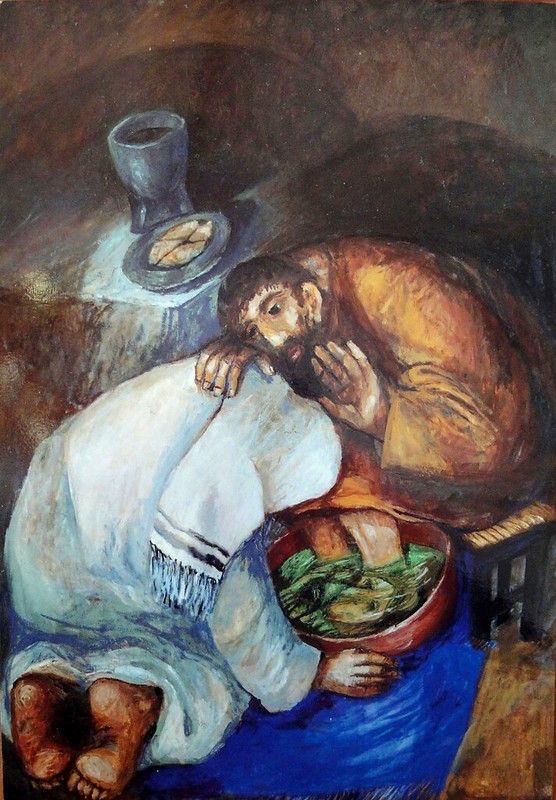
“The Game of Life”“Jesus Washes Peter’s Feet” painting by Sieger Koder
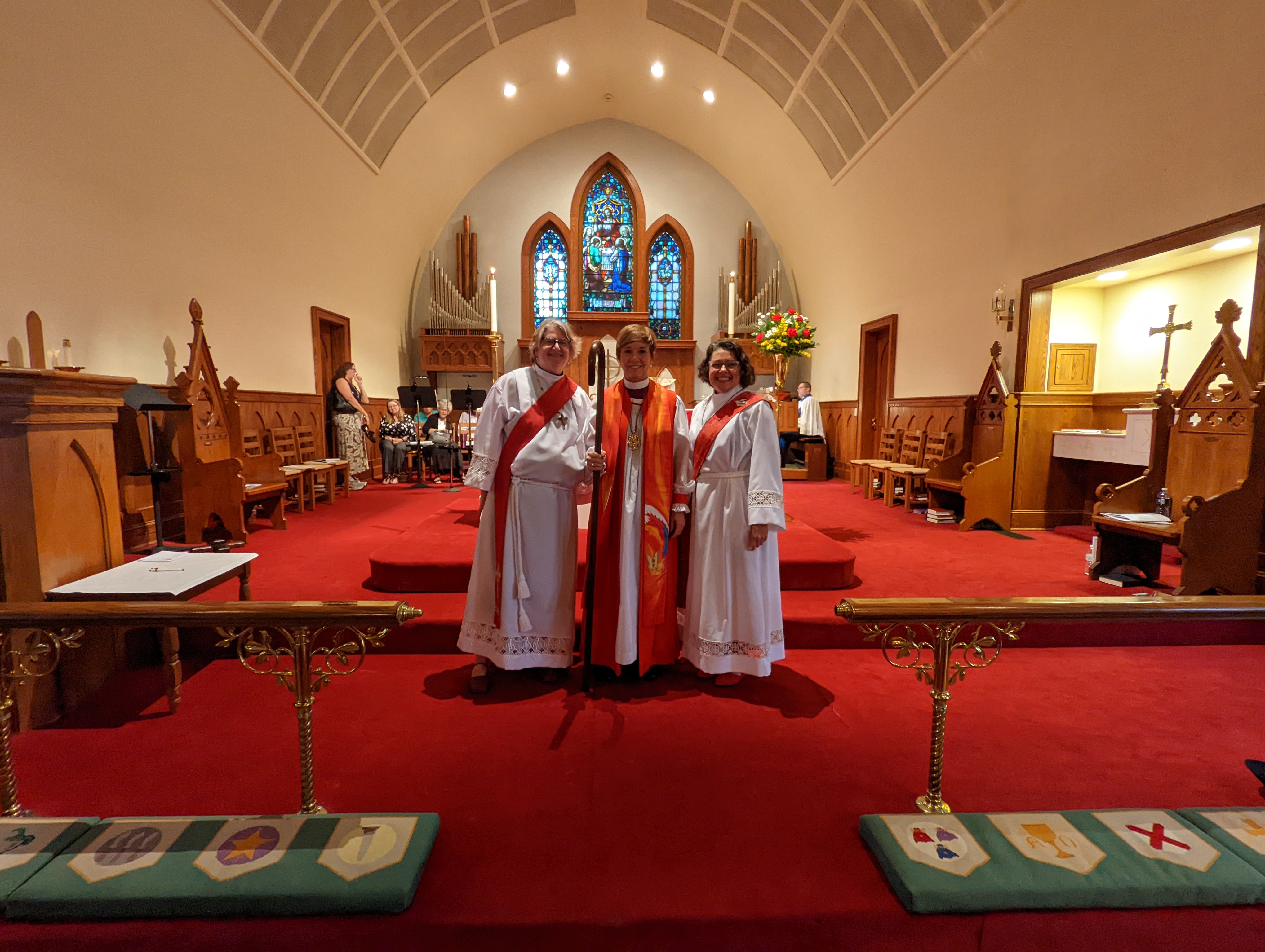
Homily for the Ordination of Deacons, The Episcopal Diocese of Virginia
September 10, 2022
(Spanish translation below/traducción al español a continuación)
Sermon Texts: Jeremiah 1:4-9; Psalm 119:33-40; Romans 16:1-7; Luke 22:24-27
I commend to you our sister Phoebe.
Today, we gather for the ordination of two women called by God and affirmed by the Church to serve as Deacons. Our Epistle lesson introduces us to another woman called by God, Phoebe, whom Paul names as προστάτις (deacon) in the church at Cenchrea, near the Greek sea port town of Corinth. Phoebe accompanies this pastoral letter in which she is commended by Paul to those in the church in Rome, “so that you may welcome her in the Lord as is fitting for the saints, and help her in whatever she may require from you, for she has been a benefactor of many and of myself as well.”
This brief encounter with Phoebe contains all of what our Holy Scriptures tell us about this saint among our great cloud of witnesses, for whom we named the St. Phoebe School for Deacons. Biblical scholarship has built up our historical knowledge of Phoebe’s hometown of Cenchrea and her likely place within it; and through cultural studies we have made associations about her social standing as a benefactor (προστάτις) in the Greco-Roman world. What stands out for me, though, is the nature of mutual relationship we see through Phoebe’s introduction and commendation. The language of this Epistle and Deacon Phoebe’s presence offer us a clear example of the early church living out the Gospel message: “I am among you as the one who serves.”
Deacons are essential for our lives of faith; deacons are the icon through which we see Christ’s own ministry of service offered up within the church and the world.
I’ve had the joy of serving as the Local Formation Director for St. Phoebe School for Deacons since this formation program began in 2019. I remember talking with others who were instrumental in its start-up about what name we should take on. As we prayed over this together, I kept hearing the words of our Epistle: I commend to you our sister Phoebe. St. Phoebe School soon had a name, and the very first thing we chose to do was to create a virtual chapel and begin offering daily prayer in that space, open to anyone. I learned from St. Phoebe during those early days of this ministry, and I learned about opening my own heart, too. We soon began to have students, and prayer partners. The virtual space quickly became a beloved spiritual community. It reminded me of how we’ve always made church together from the 1st century to the 21st.
The virtual community of St. Phoebe was already praying together regularly in March 2020. While we weathered pandemic shut-down, we also welcomed all those who desired a community of prayer. We have added three cohorts of deacons-in-formation and more are yet to come! We moved from praying together a few times a week, to weekday mornings, to twice a day for both Daily Morning Prayer and Compline. We’ve offered services of healing prayer; for racial justice; “Holding Space for Hope” and we hold both joy and grief in community. Some people pray daily, some for a season, some drop by when the spirit moves, some find us serendipitously online and send us their prayer requests which we hold in community, just as we name our own. Our patron saint, Deacon Phoebe, always seems to bring the people who need to be there together. Through the Virtual Chapel of St. Phoebe, we are all strengthened and encouraged.
I commend to you our sister, Phoebe.
The vows that Deacons make–that Susie and Dawn will soon make–invite us to see the role of the Deacon as the very image of the way in which Christ is made known in our mutual ministry and service with each other. The final sentence of the vows they will soon make sums this up fully:
At all times, your life and teaching are to show Christ’s people that in serving the helpless they are serving Christ himself.
That vow is the heart of diaconal ministry, and it implicates all of Christ’s people: that means all of us! We are reminded through the presence of Deacons in our midst that serving others isn’t about feeling good about ourselves, or dutifully following a command, or even trying to be like Jesus through our own merits. Deacons remind us that we are to serve those at the margins of this world because through that faithful service, we will meet and see Christ in each other.
This is the pastoral lesson offered up in the Epistle to the Romans: by welcoming our sister Phoebe, servant and minister, you will be welcoming Christ in your midst. Through this mutual relationship of ministry and service, you will learn together how to live as siblings, members together of the Body of Christ.
When we…the Church… learn to care for each other with the deep love of Christ only then can we…the Church…live fully into the depth of that loving care for all of God’s creation. Deacon Phoebe is our saintly reminder of the mutuality of love and ministry. Deacons are our living reminders of the mutuality of Christ’s loving presence in every corner of the world and the church in which we live and work and worship.
I commend to you our sister, Phoebe.
Today, we are all witnesses to the Holy Spirit making two new Deacons to serve the church. They have been and will be affiliated with parish communities, and will be part of the larger family of the Diocese of Virginia and The Episcopal Church…and the whole Body of Christ. They will serve among all the people of the parishes and communities in which they live and work. And yet, they are so much more. They are mirrors to all of us and continual reminders of Jesus saying, “I am among you as the One who serves.”
So, I also want to commend to you our sisters, Susie and Dawn.
I have seen Christ as the One who serves in Susie. At virtual chapel, she is the first one to notice a new face and to make them feel wholly welcomed to fully participate in our “Chapel of Many Voices.” She weaves patterns of prayer that enfold those in our midst who are struggling and creates networks of mutual support among the Body of Christ so that no person is ever alone in a hospital, on a metro, at a chemo appointment, struggling on a hard day, in a place where others don’t speak the same language, wondering about a next meal or school supplies for their children. She stitches together networks of support and adds threads of bright and diverse colors to remind us all that the world is bigger, bolder and more God filled than we ever could have imagined. And if we ever forget that, she will name it and remind us of it, boldly and with love.
I have seen Christ as the One who serves in Dawn. She spends her working hours as a social worker in a skilled nursing facility where people often feel alone and cast aside but she reminds them they are valued, loved and the center of her attention and God’s love. She invited me to celebrate Easter Sunday Eucharist for her residents there, who hadn’t been able to worship together since the start of the pandemic in 2020. It was a resurrection experience where God’s presence was felt as palpably and beautifully in that makeshift cafeteria chapel than in any gothic cathedral. I think she knew that would happen. She works with her friend Remmie to deliver food and essentials to those living unsheltered…and most importantly they bring love, dignity, respect and a shared knowledge that God is with us. Every place, every person, every day.
I could go on about each one of them, and about every single deacon-in-formation here today that God has blessed me to shepherd through their formation. But I need to close by saying something to all of you, too: we need Deacons whose very presence breaks down our business as usual with God’s transformational love as evidenced through the servant ministry of Jesus Christ. We need to welcome them, to support them, to see their ministry as central to the way we live out our lives of faith.
I commend to you the gift that it is to have a deacon in your midst. I commend to you our sisters Dawn and Susie who make their ordination vows today. And I commend to you our sister Phoebe, servant and minister and deacon, as a guide and inspiration to all of us on this journey together to seek and serve Christ in each other.
Eternal God, who raised up Phoebe as a deacon in your church and minister of your Gospel; Grant us that same grace that, assisted by her prayers and example, we too may take the Gospel to the ends of the earth; through Jesus Christ your Son our Lord who lives and reigns with you, in the unity of the Holy Spirit, one God, for ever and ever. Amen.
Sermón predicado por la Rev. Dra. Sarah Kye Price, sábado 10 de septiembre de 2022 Ordenación al Diaconado – Dawn Sykes McNamara y Susannah Greer Harding
Lecturas: Jeremías 1:4-10, Salmo 119:33-40, Romanos 16:1-7, San Lucas 22:24-27
Les encomiendo a nuestra hermana Febe.
Estamos reunidos para la ordenación de dos mujeres llamadas por Dios y afirmadas por la Iglesia para servir como diáconas. La lectura de la epístola nos presenta a otra mujer también llamada por Dios, Febe, a quien Pablo distinguió como diácona en la iglesia de Cencrea, cerca de la ciudad portuaria griega de Corinto. Febe llevaba consigo la carta pastoral en la que Pablo la encomienda a los líderes cristianos de la iglesia de Roma con estas palabras, “recíbanla en el nombre del Señor, como se debe hacer entre hermanos y hermanas en la fe, y ayúdenla en todo lo que necesite, porque ella ha ayudado a muchas personas y también a este servidor.”
Lo único que dicen las Sagradas Escrituras sobre Febe, quien fue testigo de la fe cristiana y santa de la Iglesia, fueron esas breves líneas. Fue por esta encomienda de San Pablo por lo que le hemos atribuido a nuestra escuela diocesana para diáconos el nombre de Febe, la Escuela de Diáconos Santa Febe. Algunos historiadores bíblicos han recopilado datos del lugar de su nacimiento, Cencrea, y nos comparten detalles del estrato social de personas como ella, benefactores en un mundo grecorromano. Sin embargo, lo que más me llama la atención de Febe es la manera en que Pablo la presenta, como alguien quien por naturaleza compartió lo que Dios le había proporcionado a ella – la benefactora. Lo que se dice de esta diácona en la epístola nos muestra cómo operaba la Iglesia primitiva y cómo las acciones de aquellos seguidores se intercalaba con el mensaje del Evangelio: “yo estoy entre ustedes como el que sirve.”
Los diáconos son esenciales para nuestras vidas de fe; ellas y ellos son como podemos ver reflejado el ministerio de Jesucristo para servir dentro de la iglesia y en el mundo.
He tenido el honor y el placer de servir como la Directora de Formación para la Escuela de Diáconos Santa Febe desde que se estableció en el 2019. Recuerdo hablar con las demás personas que formaron parte del grupo organizador de la escuela de diáconos sobre el nombre que le deberíamos dar. Mientras orábamos y reflexionábamos sobre el nombre apropiado, yo escuchaba las palabras de la epístola, “Les encomiendo a nuestra hermana Febe, diácona en la Iglesia de Cencrea.” Fue a raíz de lo que yo escuchaba en mi corazón que la escuela de diáconos obtuvo su nombre.
Creamos una capilla virtual para ofrecer la oración diaria en un espacio virtual y accesible a toda persona. A través de todo lo que estábamos haciendo en esos primeros meses aprendí mucho más de lo que nos dicen las escrituras sobre Santa Febe y también aprendí a abrir mucho más mi corazón. Inscribimos alumnos y compañer@s de oración y la capilla virtual pasó a ser una comunidad espiritual, algo que me hizo pensar las maneras en que los cristianos a través de la historia nos congregamos en cualquier lugar para orar.
A partir de marzo de 2020, la comunidad virtual de Santa Febe solo pudo reunirse debido a la pandemia y por el cierre de las iglesias. Entonces invitamos a toda persona que deseaba unirse a orar, y a partir de entonces continuamos invitando a nuevos grupos de diáconos en formación a orar diariamente en la capilla virtual al igual que a otras personas que desean orar. Inicialmente orábamos un par de veces por semana, de ahí pasamos a orar todos los días y en este momento oramos dos veces al día – la oración matutina y el oficio de completas en la noche. Ofrecemos servicios de sanación; oramos por la justicia racial, por la esperanza que tanto ansía tener el mundo, por las alegrías y por los desafíos de personas en nuestras comunidades. Algunas personas se unen diariamente, otras por temporada, y más aún otras se unen cuando el espíritu les mueve. Hay personas que nos encontraron a través de las redes sociales y nos envían peticiones de oración a través de esos medios. Me parece que Febe, nuestra santa patrona, reúne a las personas que necesitan estar ahí presentes. A través de la Capilla Virtual de Santa Febe, nos fortalecemos y nos acompañamos.
Les encomiendo a nuestra hermana Febe.
Los votos que toman los diáconos y que en unos minutos tomarán Susie y Dawn, nos invitan a reconocer cómo Jesús se manifiesta en nuestras acciones y en los ministerios de servicio al prójimo. Las últimas palabras que ellas dos dirán antes de tomar sus votos diaconales resumen claramente lo que es la orden vocacional del diácono:
En todo momento, sus vidas y enseñanzas deberán mostrar al pueblo de Cristo que, sirviendo a los desvalidos, están sirviendo al mismo Cristo.
Esta promesa, estos votos, son el corazón del ministerio diaconal y a la misma vez implica a todo el pueblo de Cristo, ¡a cada uno de nosotros! La presencia de diáconos y diáconas entre nosotros nos recuerda que servirle al prójimo no se trata de sentirnos importantes por lo que hacemos, o de seguir el mandato que Dios nos hace y ni siquiera de intentar seguir los pasos de Jesús. Los diáconos han de recordarnos que hemos de servir a los que viven al margen de nuestras comunidades porque a través de ese servicio nos encontraremos con Cristo y veremos su rostro en los rostros de las personas a las que servimos.
La enseñanza pastoral de la carta a los Romanos es que al acoger a la hermana Febe, sierva y ministro, también recibimos a Cristo. A través de la relación y del servicio mutuo, aprendemos a convivir como hermanos y hermanas en la fe, miembros todos del Cuerpo de Cristo.
Cuando nosotros… la Iglesia… aprendamos a cuidarnos los unos a otros con el profundo amor de Cristo, sólo entonces podremos… la Iglesia… vivir plenamente en el amor profundo por toda la creación de Dios. La Diácona Febe nos recuerda diariamente la reciprocidad que hay en amar y en servir al prójimo y los diáconos nos han de recordar también de la presencia y del amor de Cristo en nuestras congregaciones y comunidades.
Les encomiendo a nuestra hermana Febe.
Hoy somos testigos de cómo el Espíritu Santo está impulsando a dos nuevas diáconas al servicio de la iglesia y de las comunidades. Ellas están y seguirán afiliadas a parroquia y formarán parte de la gran familia de la Diócesis de Virginia, de la Iglesia Episcopal, y del Cuerpo de Cristo. Servirán a toda persona en las comunidades donde viven y trabajan, y harán mucho más. Ellas son como espejos que nos recordarán las palabras de Jesús, “yo estoy entre ustedes como el/la que sirve.”
Así que encomiendo a sus oraciones a nuestras hermanas, Susie y Dawn.
De ellas les puedo comentar que he visto por ejemplo en Susie el rostro de Cristo que sirve al prójimo. En la capilla virtual, es la primera en reconocer una cara nueva y les hace sentir acogidos invitándoles a participar como una voz adicional en nuestra “Capilla de múltiples voces”. Ella “hila” las oraciones de participantes para crear un patrón de oración y se cerciora de que toda persona forme parte de esa red de apoyo mutuo que es el Cuerpo de Cristo. Se asegura de que ninguna personas se encuentre sola en un hospital, en el metro, en una cita de quimioterapia, en su lucha diaria, en lugares donde personas no hablan el mismo idioma, con los que no saben de dónde vendrá la próxima comida o con personas que no tienen suficientes recursos para comprarle materiales escolares para sus hijos. Susie crea redes de apoyo e intercala hilos de múltiples colores y diversos para de esa manera recordarnos que el mundo es mucho más amplio, brillante y lleno de Dios de lo que jamás hubiéramos podido imaginar. Y si alguna vez nos olvidamos de aquellas personas que están al margen, ella es la primera en recordarnos incluirlos a todas y a todos, con ímpetus y con amor.
He visto en Dawn el rostro de Cristo que sirve al prójimo. Ella es trabajadora social en un centro de cuido para personas aisladas de sus comunidades donde les recuerda a diario a los residentes que son personas valoradas, amadas y el centro del amor de Dios. Dawn me invitó a celebrar con los residentes la Misa de Pascua de Resurrección este año porque no habían podido participar de una Misa desde el comienzo de la pandemia en el 2020. Fue una experiencia de resurrección para mí porque vi con mis propios ojos la divina y hermosa presencia de Dios en aquella capilla improvisada del comedor del centro de cuidos; así como se siente uno al estar en una gran catedral. Me parece que Dawn ya sabía de antemano que así nos sentiríamos todos. Ella y su amiga Remmie también reparten víveres y artículos de aseo a personas sin hogar… y lo más importante es que lo hacen con tanto amor, dignidad, respeto y conocimiento de que Dios está presente con todas las personas que conocen en las calles – en cada lugar, con cada persona y en cada día.
Podría seguir hablando de mis hermanas y de cada uno de los diáconos en formación presentes aquí hoy. Dios me ha bendecido para guiarles en su formación. Pero antes de terminar quiero compartirles algo importante: necesitamos más diáconos. Diáconos cuyas presencias en nuestras iglesias y comunidades rompan los esquemas de nuestras rutinas diarias con el amor transformador de Dios que sucede a través del ministerio de servicio que nos enseñó Jesucristo. A la misma vez necesitamos acoger, apoyar y ver los ministerios de los diáconos que tenemos como algo esencial en nuestras propias vidas y en nuestras comunidades de fe.
Así que encomiendo a sus oraciones a estas diáconas entre nosotros. Encomiendo a sus oraciones a nuestras hermanas Dawn y Susie, que hoy toman sus votos de ordenación al diaconado. Encomiendo a sus oraciones también a nuestra hermana Febe: sierva, santa, ministro y diácona, como guía e inspiración para los que caminamos en búsqueda y en servicio al Cristo que está presente en el prójimo.
Eterno Dios, que levantaste a tu sierva Febe como diácona en tu iglesia y benefactora de tu Evangelio, de modo que llevó el mensaje de tu apóstol Pablo al corazón mismo de un imperio hostil; concede que también nosotros, ayudados por sus oraciones y ejemplo, recibamos la misma gracia para llevar el Evangelio hasta los confines de la tierra; por Jesucristo, tu Hijo nuestro Señor, quien vive y reina contigo, en la unidad del Espíritu Santo, un solo Dios, por los siglos de los siglos. Amén.
Gracias mi amigo y hermano Padre Daniel Vélez-Rivera que tradujeron mi homilia!
Depending on when you ask me, there is either a major shift or a “soft transition” going on in my blended vocational life. There are a few specific updates to share, but the real joy for me has been in the synchronicity and the journey to get to this place where I am right now. So, I decided that writing this blog post was my preferred way to tell the story to those who know me and support me on this journey, rather than just changing my profile on Facebook and LinkedIn. When your vocation resides in the blend of things that give your life meaning and purpose, there aren’t really “beginnings” and “endings.” Instead, all the pieces of our lives get rearranged and re-shaped in ways that help us do the work we’re called to do. I’m grateful to find myself in the midst of that soulful reshaping these days.
First, some concrete information:
“Letting Go” I will be wrapping up my time as Associate Dean in just a few days, and rejoining my faculty colleagues in the School of Social Work at VCU for the start of Fall semester 2022. I’ll be working on my scholarship and teaching in our doctoral program: the first year Research Methods course with our incoming students, and the Teaching Practicum with our students moving between coursework and dissertation. It will be a joy to work more closely with our doctoral students again.
“Taking On” I have accepted a call to serve as the interim Vocational Development Minister with the Episcopal Diocese of Virginia on a part-time basis along with my faculty role this year. This doesn’t replace my role with St. Phoebe School for Deacons; rather, it deepens my work with Vocation and Call in our diocese, working with all those who are preparing to serve the world and the church through ordained ministry as priests and deacons. I hope to explore pathways for lay and bivocational/blended vocational ministry as well (an area around which I am clearly quite passionate!). Our diocese is in a Bishop transition, and my colleague who has filled this role for 12 years is in transition to his own new vocation and graduate study. So, it feels right, good and holy for me to be invited in, give what I can, and learn deeply in the process. I’m grateful for the invitation and opportunity to serve.
These new commitments are August – May; I am filled with excitement, curiosity, challenge and conviction to bring what I can to these roles where I’m called. There are still places for the projects around which I’m passionate: the social work and spiritual care development, the ministry with those on the margins, the visiting of parishes with preaching and teaching, the opportunities to serve in priestly ministry with congregations and colleagues who are dear to me, all of which fills my cup and gives me joy. All these weave into this present time of being. The rest will emerge.
Now, for a bit of reflection on all this. I direct your attention to two images.
The heavy tile paperweight of a line-drawn sheep was given to me in 1993 by my MSW field supervisor at the end of my final year of practicum. She noted two things (I paraphrase, it was a while ago): “Sarah, you are an outstanding social worker in the field. And, no grass grows under your feet!”
I’ve been thinking about both of those things in these days of navigating transition and call. “My field” of social work has never been just a job; it was and is my first vocational call. The time spent this spring and summer with seminarians at CDSP was so joyful and meaningful for me, bringing to my classes and conversations the best pieces of my 25+ year old, well-developed tool kit of social work to help them serve in ministry. It took me back to my roots, and made me recognize with gratitude the ways in which I am a social worker to my core. With that realization came the immediate recognition of the interconnectedness of social work values and ethics with the commitments I made in my spiritual life: the Baptismal Covenant of the Book of Common Prayer that I also encountered for the first time while a social work student. My vocations have been blending for as long as I can remember. And on this day, I give thanks for the continued blessings of that blending.
“No grass grows under your feet.” Yep…that is true. I like the ever-changing landscape of doing new things, learning new things, taking up an opportunity to try something new and challenging presented to me. I like to graze on the grass around me and see where that leads. I’m not someone who has aspirations to go the moon or become president (heaven forbid). I appreciate that which surrounds me, and when I’m invited into something new, I willingly step on that new patch of grass and see what it has to offer. I’m excited to have been invited to journey deeper into ministry with the Diocese of Virginia, to support those who are splashing around in the waters of new vocation and strengthen those who are preparing for ministry in their own vocational lives. I hope, with God’s help, that I have resources to offer to you who are opening your hearts to new ministry, and to those who support and shape you on that journey. My prayer is that this process will allow you to see new iterations of yourself and your gifts for ministry continuing to emerge.
I’m going to be noticing what is growing and taking root in my own spirit during this time, too. I know I will have to be adaptive and creative in this blended vocational adventure. I’m grateful to the leaders in both institutions where I work who have the trust and grace to step into this with me, knowing that my yes-saying is to both of these calls right now; I would not be true to myself and my call were I only to be in one without the other. I could easily end up trying to be 110% in both spheres of my life but that will be futile and disappointing to everyone, including myself. What I will strive to be is transparent, organized, thoughtful and most of all: present. Learning to blend one’s time is a bio-psycho-social-spiritual exercise (as we social workers say) in trust, grace, and presence. It isn’t about splitting up all the hours thinner and thinner like they are a scarce resource (though I acknowledge it may feel that way at times); it is about knowing that with God’s help, it will be enough. I am enough. You are enough. And we can be fully present to that enough-ness in ourselves, and in others.
Prayer is my foundation in this new endeavor.
I composed this set of Anglican prayer beads for myself this weekend, as I was preparing to take up this new blended vocational path in the coming months.
I chose some very specific reminders in making this set, and prayed some deep and important prayers for those whom I will work with and for my own journey, too. This set anchors with a Tree of Life, because the growing of vocation is the particular call I have been invited to take up. Each time I pray, it will be a reminder of that yes-saying. Two crosses follow, inviting me to pray into the plurality of call. I chose purple beads, taking on the diocesan color (for those who share office life nerdiness: my Google Calendar similarly demarcates my meetings by color that way, too!); there are 28 smooth amethyst beads, for clarity of mind and calmness of spirit. The cruciform beads demarcating the weeks are composite, an abstract mosaic of pieces smoothed together (like the fragments of my life, formed and shaped by God). Each one found its way on with a prayer.
For those who are reading all of this, thank you. I invite your continued prayers, and I am deeply grateful for all the love and support which surrounds me on this journey of life and vocation. I’ll close with a poem and blessing that has been important at other junctures of my journey, too. It is speaking to my soul again.
Sarah+
For a New Beginning
by John O’Donohue
In out-of-the-way places of the heart, Where your thoughts never think to wander, This beginning has been quietly forming, Waiting until you were ready to emerge.
For a long time it has watched your desire, Feeling the emptiness growing inside you, Noticing how you willed yourself on, Still unable to leave what you had outgrown.
It watched you play with the seduction of safety And the gray promises that sameness whispered, Heard the waves of turmoil rise and relent, Wondered would you always live like this.
Then the delight, when your courage kindled, And out you stepped onto new ground, Your eyes young again with energy and dream, A path of plenitude opening before you.
Though your destination is not yet clear You can trust the promise of this opening; Unfurl yourself into the grace of beginning That is at one with your life’s desire.
Awaken your spirit to adventure; Hold nothing back, learn to find ease in risk; Soon you will be home in a new rhythm, For your soul senses the world that awaits you.
Agapanthus blooms at Church Divinity School of the Pacific
I am nearing the close of my June sabbatical in this beautiful space in the East Bay of San Francisco that has become a spiritual homing beacon that draws me back, time after time. As those who know me might anticipate, I’m feeling reflective as I approach the transition home. I know that what I want to say far exceeds a social media post, so I decided to write down some thoughts to share with those who have been holding me in love and prayer during my sabbatical journey.
The first time that I ever stepped foot on the campus of CDSP for a campus visit, I was greeted by a beautiful, full antlered deer strolling across the street of the Berkeley Hills, blissfully undaunted by people and buildings, just sauntering like any of the rest of us pedestrians making our way home. There was something about that moment: time stood still, my anxiety and exhaustion melted away and I was simply present. It was a gift, and it still is one. I have learned so much about theology and ministry in the seven (can it really be?) years since that first visit. More importantly, perhaps, I’ve learned to be present to my life, to my call, and to God.
I was walking home from the post office today after mailing home some of my books. While I was taking in the incredible flowers, succulents and fruit trees (loquats!), I suddenly realized I was looking directly at a young doe, making her way across the Berkeley street. In that moment, it all came full circle in my mind: a visitor, a student, a graduate, an alumni and now having taught an amazing class to round out this visiting professorship. In all of the learning, the studying, the relationships, the spiritual formation: what I have been doing at the heart of it all is learning to be present. It’s taken seven years and this solid month of sabbatical time for me to realize the incredible and beautiful simplicity of that. This life is a gift that keeps opening.
While I have been here, I haven’t been apart from a hurting world. I’ve stayed present with those who were crying and shed tears of my own as we collectively grieved over multiple mass shootings as well as personal tragedies in our lives. We navigated cases of COVID-19 in our gathered community, weathered the storms of policies and rulings that cut to the core of people’s inner lives and public witness, held public liturgies of lament in solidarity with our siblings at St. Stephen’s in Vestavia Hills and for those who suddenly felt their privacy and agency ripped away with a supreme court ruling. In our off hours, we heard the brazen truth-telling of congressional hearings as we crammed in all of the daily work relentlessly required during a summer intensive (for my students, reading and writing; for me, prepping and grading). And through it all, we prayed and built relationships. We took in new knowledge and gained immense wisdom. We learned to stop and to be present, with God and with each other.
I deepened in my relationships beyond seminary as well. I was able to be consistently present with the community at St. Gregory of Nyssa across weekly services, and even to wear the best liturgical garments anywhere (see prior post) and speak from my heart at the Spirit’s beckoning as I delivered a homily in worship with the dancing saints. I felt myself forming in and with this community of people, awakening to the gifts of hybrid worship that allow us to be present across time zones. A few people said to me, “you really get us” and I would say back: you all really get me, too. It’s profound to have a spiritual home away-from-home. It’s truly a gift for a priest, as my clergy friends are well aware. I promise to join you in hybrid worship whenever I can from the East Coast, and will look for my very own “button” with joy during my next visit, as I’m certain there will be.
I also walked the labyrinth at Grace Cathedral and paid my respects to those whose memories I have laid to rest in the AIDS Interfaith Chapel over the years; may light perpetual shine upon you. I sailed across the Bay, bought incredible local produce at farmer’s markets, spent way too long staring at all the good things at Berkeley Bowl, and this time added to my East Bay experience with a drive to Richmond CA to spend my birthday with Rosie the Riveter. I pilgrimaged to see Jane Addams in stained glass, met Donaldina Cameron via icon and made a quick stop past Cameron House that bears her name and continues her mission. I have had picnics on park benches and hiked to see sunrises over the hills and sunsets over the Bay and honestly can say, the awe never wears off.
This final sabbatical week has been a self-designed writing retreat, which is something I have intended to do for at least five years now. No time like the present! I’ve made use of every beautiful day to write outdoors, and on the cloudy ones I’ve nested in my space with the company of fresh flowers and my trusty basil plant which has flavored my meals and brightened my kitchen. I’ve found opportunity to nurture my soul every day, and what I have accomplished has been so much more than my workaholic ways generally lead to (amazing!). I’m taking that lesson back with me. My prayer beads and books of poetry have been well-beloved friends, and my sleep has been restful, especially on the cool nights where I crack my windows and burrow under a blanket, which never happens back home in the south during the summer. I’ve nurtured my spirit daily as a priority and while doing so I have prepped and taught a brand new class, led liturgy, preached, and produced a fairly solid draft of a book proposal; earlier today I would have aptly used Anne Lamott’s description of an SFD (“shitty first draft”) for what I have produced, but having read it over tonight, I’m pleasantly surprised. I am excited about writing again, and hopefully getting someone to publish it. Mostly, I’m happy about the first part and know the second part will come as it will. It all starts with being present.
When I return home, there will be a chance to rejoin my family who have been at all the things of their lives, too. It takes time to reconnect, so I will make space for that before running off to all the things that will pull me in. Next week, there will be a retreat to lead (oh, I’ve been preparing for that, too). There will be work to re-engage, people to catch up with, discernment about next steps in my life of ministry, and continued engagement with what has been set in motion during this visiting professorship. My relationship with CDSP continues, and I’m grateful to remain connected. Life moves on from this time of protected growth into full bloom. I hope to stand tall and bloom large, like my friends the agapanthus that proliferate with beauty all around campus. I’m coming to this next chapter of the journey with more strength, having been nurtured at my roots…not to mention the tender blessings of wind, water and sun.
I close with gratitude for this time and hope for whatever comes next. And of course, a few photos which will keep my memories alive and continually renew my spirit, until the next time.
Long before I was a priest…back when I was a newly minted social worker…I worked for a residential health care facility in Buffalo, NY where my assignment included staffing both a medical unit, and a memory care unit. I floated between the two units, so one of my responsibilities was to determine which space better met the care needs of each resident.
One day, I was working on the medical unit making sure my notes were up-to-date during the annual inspection from the state health department. We had a newly admitted resident who was sitting in her chair, directly in my line of sight. I’d been asked to observe her to see which unit might be a better fit for her care. As happens when staff are under the watchful gaze of authorities, everyone was feeling on edge. Nurses were making sure the right medications went out at the right time to all the right people, and CNA’s were scurrying to get people dressed, bathed, and fed with more expediency than perhaps was typical. The resident under my watchful care was trying to talk to all the busy people passing her by, “Excuse me!” she’d say. The nurse would reply, “I’ll be right back!” and hurry off with her cart. “Could you help me?” she would say to get the attention of the CNA who was wheeling someone off to their room, “I’ll be back in just a minute!” they would reply.
My head was down, writing my intake note when I heard the woman suddenly burst into a loud cry, “THE DEVIL! THE DEVIL!! THE DEVIL IS OVER HERE!!!!” she yelled at the top of her lungs. I flew out from behind the desk to run over to intervene in this mental health crisis, the nurse left her cart, the CNA reversed course to see what kind of situation had emerged. And we all did a double-take when our new resident calmly shifted herself in her chair and said, “There we are. Now that I have everyone’s attention: could someone please help me to the restroom?”
Suffice it to say, my assessment read: “Excellent self-advocate with no cognitive deficits noted”
That was a pivotal moment in my early career. My own presumptions got in the way of truly seeing a person in strength and humanity. I’ve shared that story with my social work students back home at VCU as a prelude to talking about the human and spiritual dimensions of the social work profession. I’m talking about the blend of social work and spiritual care right now at Church Divinity School of the Pacific where I once studied, and now I’m serving as a Visiting Professor this summer. We grow from moments like this that sneak up on us, and catch us right in our assumptions. We’re given one of those moments in today’s Gospel.
The Gospel sounds like a movie script, doesn’t it? I can practically see the trailer: a creepy cemetery with a figure lurking around, cutting to a hillside filled with pigs running headlong to their demise. But let’s step away from the cinematics to the heart of the lesson. I’m convinced that the people living in the country of the Geresenes thought they had this situation all figured out. I can imagine the kind of stories that were told about the naked, crazy man who lived in the tombs, cast out from the daily life and residential vibe of the city. I’m sure that the rumor mill was on fire whenever he was acting out, and the authorities began to think nothing about binding him up in chains and shackles in the name of safety, “for everyone’s good.” I can imagine parents scooping up their children and shushing them when they wondered out loud who that man was and asked what he was doing, living where the dead were supposed to be. Childish curiosity turned quickly to fear, and fear turned to stigma, and stigma turned socially sanctioned discrimination where no one thought twice about marginalizing this outcast labelled as a demoniac who didn’t have access to housing, clothing or basic needs because (subtext) they couldn’t really be human after all, could they? Being less than human, of course, justified their acts of punitive exile and carceration for the safety of self and others.
We may be living in a different century, but some situations seem shockingly familiar.
Enter Jesus, who earlier in the Gospel according to Luke, has just stilled the winds and waves of rough waters and now steps from sea onto dry land. Jesus is welcomed ashore by this outcast who has seen torment, shackles, ridicule and oppression; that which is in possession of him recognizes Jesus for exactly who he is and he exclaims it at the top of his voice. I doubt it sounded like holy recognition. Like my resident on the unit, that greeting probably struck fear into the disciples and all who were nearby. Everyone was in position and ready to react.
Except Jesus. Instead, Jesus asks: “What is your name?”
What is your name?
It sounds like a simple question, but it tells us so much about Jesus. The question Jesus asks is singular, personal, human. And even when the man cannot identify himself beyond that which possesses him, Jesus’ response is to cast away that which was not of the person, to free the human being who has been imprisoned by the evil forces of this world. After all the resulting drama involving swine and cliffs settles and the swineherds go into the city to tell the tale of what they saw, because…well…who doesn’t want to share a story like that…people drop their busy lives to rush into the dramatic scene to see what has happened. They set out anticipating great drama unfolding from one they had demonized, and arrive to see something else entirely: a person who is whole, clothed, calm and sitting as Jesus’ feet.
And they were afraid.
The order of operations by which this Gospel lesson unfolds isn’t lost on me, and I don’t for a moment think it’s accidental. Deep fear sets in when they see the person, the human being, the one just like them. They came to that scene expecting what they had come to expect: a demoniac, a non-person, an outcast. Now, they saw a person. And they were afraid.
It was too terrifying to confront the reality of our common humanity, to recognize that the person Jesus was able to see singularly was in effect, every person. The sad reality is that it’s easier to keep a demoniac…or any other “label”…cast out from a community, then it is to welcome and greet a human being that we now see clearly is and always has been one of us.
Jesus sees that man, and each of us, as a person. That radical love was too much for the people of the Geresenes. They ask Jesus to leave; the fear of seeing their common, equal humanity was just too great. But it was enough for the healed man, who saw himself renewed and asked to go with Jesus. I can imagine why, can’t you? It’s hard work to confront stigma and fear, day after day. But Jesus asks him to remain and he does, using his voice and story and person to share the Good News even to those who had cast him aside, who were afraid, who could not see him as a person. Yet. But Jesus had seen him, and healed him. And being seen, respected and loved was enough for him to stay and proclaim the good news of what Jesus had done, believing others would eventually see it, too.
The Good News in this story is profound: there is no amount of human marginalization, no amount of possession by the structures and forces of evil that can keep us from being seen, and known and loved by Jesus and healed by divine love and grace. Not a legion of demons; not the evils of racism, sexism, homophobia, nationalism; not the terror of unchecked gun violence; not the structures of addiction, illness, fear, or oppression. We are seen, known and asked our name…invited to see ourselves beyond the structures and forces of evil that can enslave us and others. The value of our personhood matters to God, profoundly.
We can also be overwhelmed when confronted by the holy equality of the Good News of God in Christ: Can we see others as Jesus sees them? Can we see ourselves, as Jesus sees us?
I hope the answer to both questions is: I will, with God’s help.
We are invited to move from the fear that enslaves us and into a new reality, a new freedom, a new way of life through God’s healing grace.
That kind of radical celebration is the heart of Juneteenth: an anniversary celebration of the words of General Order No. 3 reaching people at the furthest edge of Texas who were still enslaved not by law but by the continued abuse of power and perpetuation of the oppressive status quo. That document reading was two years after the emancipation proclamation, and two months after Robert E. Lee surrendered to Ulysses S. Grant at Appomattox. We can imagine the freedom and emancipation conveyed to those who had been enslaved, and lament the reality that fear still fueled the hearts of those wielding the power and privilege of possession. Juneteenth invites us to solidarity: celebrating freedom from the evil of slavery and the evils that enslave us, liberating us to live into the vision of holy equality we read today:
In Christ there is no longer Hebrew or Hellenist, there is no longer slave or free, there is no longer male and female; for all of you are one in Christ Jesus. Imagine that as an invitation. Imagine that as the lead in to Jesus asking you not how the world sees you but, “What is your name?”
There is healing that needs to happen with the oppressive structures of this world, and there is healing that needs to happen in the most personal, ordinary everyday spaces where we greet each other with our common humanity. The Good News is, Jesus models for us a place where we can begin and from which healing and transformation can and will emerge, with God’s help.
So, I invite you to ponder, and then to pray, and then to act: who are we being called to ask, “what is your name?”
Watch the full service (Zoom Stream from St. Gregory of Nyssa):