Leaders

Tonight, as I sit to write, I am thinking about leadership. I have had the chance to reflect on this theme often this week, numerous times and in various ways. Sometimes, my own leadership has been the center of exploration by my own choice, or by someone else’s suggestion. At other times, it has been my observation of leadership in those I know, and those I mentor.

My thoughts are swirling tonight after a day where I have shifted gears many times. And, I know I need to stop and be still to fully take in all that this day has offered for my journey. Everything about this day, though, brings me back to reflect on authentic qualities of leadership. I see this reflected especially tonight in the two women I have had the honor to work with on their journey through the doctoral program and into new chapters of their own professional leadership.

So, I am closing my computer tonight to seek stillness after sharing these words from John O’Donohue. I dedicate this to Mariette and to Beth-ann on the occasion of their successfully defended dissertations. This is a blessing for their journey, and my desire for all of us who lead in ways great and small:

For a Leader

May you have the grace and wisdom
To act kindly, learning
To distinguish between what is
Personal and what is not.

May you be hospitable to criticism.
May you never put yourself at the center of things.
May you act not from arrogance but out of service.

May you work on yourself,
Building up and refining the ways of your mind.

May those who work for you know
You see and respect them.

May you learn to cultivate the art of presence
In order to engage with those who meet you.

When someone fails or disappoints you,
May the graciousness with which you engage
Be their stairway to renewal and refinement.

May you treasure the gifts of the mind
Through reading and creative thinking
So that you continue as a servant of the frontier
Where the new will draw its enrichment from the old,
And may you never become a functionary.

May you know the wisdom of deep listening,
The healing of wholesome words,
The encouragement of the appreciative gaze,
The decorum of held dignity,
The springtime edge of the bleak question.

May you have a mind that loves frontiers
So that you can evoke the bright fields
That lie beyond the view of the regular eye.

May you have good friends
To mirror your blind spots.

May leadership be for you
A true adventure of growth.

–John O’Donohue

Posted in Lent 2014, quotations and reflections, work and life | Tagged , , , , | Leave a comment

Pelican

Yesterday, a pelican crossed my path as I started out on my Lenten journey of Cultivating Sacred Space. Admittedly, it was not an actual flesh-and-blood pelican, but its appearance in my life on Ash Wednesday was fortuitous, nevertheless. This particular pelican was gifted to me from someone who was and is an important part of my faith journey, and who has come to know me well this past year. She was travelling, saw the pelican, and brought it back as a gift for me. She noted that this bird, now beautifully captured in smooth, polished South American mahogany, had been carved with a machete. That seems implausible to me as a non-sculptor, but I can see the large cuts now smoothed over in the wood. I trust the story. We both recognized the pelican as a Christian icon, but were a little fuzzy on the details and derivation of its meaning. Of course, that made it an even better gift from my perspective, because it came with a quest for knowledge. She probably suspected that would be the case!

I came home last night, carrying my pelican in my purse. My work day had been marked by a peculiar academic tradition: a dissertation defense. As “Chair”, I bequeathed the title of “Doctor” to my student with the support of her committee of mentors. Some change takes place in that time that is both literal (you passed!) and symbolic (so what does that mean?). We marked the induction with a celebratory toast of champagne, and the signing of official documents. I then went to Ash Wednesday service at my church, rich with symbolism of ashes, dust, chrism, life, death filling music and liturgy. I swooped back home to help my fifth grader with her history homework that involved taking in the mythic story of another culture, the Ramayana, and trying to put that into her still developing understanding how culture and rules and stories shape who we are as social beings. Finally, after a day of much symbolism, my pelican and I settled down together and started to explore a bit deeper into its own symbolic meaning.

I started with what I knew: in Christian iconography, the pelican is used as a symbol of Jesus Christ. What was more fascinating, though, was to learn why. Like many ancient icons, the story on which it is based is dubious at best. The lore of the pelican is that the male pelican would seemingly kill its children in an attempt to care for them (think large, pointy beaks). The mother pelican would find her young seemingly dead children and, piercing her own breast with her beak, use her blood to revive the fledgling pelicans. After three days, the birds returned to life. One can see why this metaphor became symbolically linked to the pelican icon as both the charity, and atonement, linked with resurrection.

The first thing that happened is that the scientist in me scoffed at the misconstrued notions of paternal and maternal roles in the symbolic icon’s actual animal origins. Then, it dawned on me like a flash: I spend every day of my scholarly life dealing with the misconceptions and perceptions around parents…mothers and children, in particular. I find myself sitting in homes where great love has been out poured by young mothers on even younger infants, at the same time that the world is scoffing at (or has written off) these same women, preferring to judge rather than to understand. Even without the religious interpretation, the pelican’s symbolism of compassion for the misunderstood instantly held meaning and significance.

Back to the religious side, I thought about icons, and what draws me (and others) to them. I realized that the deep symbolism of icons allows us to transcend literalism, to move away from seeing a large billed bird and instead, tap into something more than facts and myths to get at an understanding more ephemeral than intellectual. I did some exploring and found that one of the most commonly cited Christian references to the pelican originated in the writings of Thomas Aquinas, specifically in the Adoro te devote:

Adoro te devote, latens Deitas, quae sub his figuris vere latitas: tibi se cor meum totum subiicit, quia te contemplans totum deficit.

Visus, tactus, gustus in te fallitur, sed auditu solo tuto creditur; credo quidquid dixit Dei Filius: nil hoc verbo Veritatis verius.

In cruce latebat sola Deitas, at hic latet simul et humanitas; ambo tamen credens atque confitens, peto quod petivit latro paenitens.

Plagas, sicut Thomas, non intueor; Deum tamen meum te confiteor; fac me tibi semper magis credere, in te spem habere, te diligere.

O memoriale mortis Domini! panis vivus, vitam praestans homini! praesta meae menti de te vivere et te illi semper dulce sapere.

Pie pellicane, Iesu Domine, me immundum munda tuo sanguine; cuius una stilla salvum facere totum mundum quit ab omni scelere.

Iesu, quem velatum nunc aspicio, oro fiat illud quod tam sitio; ut te revelata cernens facie, visu sim beatus tuae gloriae. Amen.

In this Latin prayer (stanza 6) Aquinas writes, “Lord Jesus, Good pelican, wash me clean in your blood, one drop of which can free the whole world of its sins.”

I realized when reading Adoro te Devote that it wasn’t the literal translation of these words that was speaking to me at this moment on my journey. I know these words well in a plain-chant hymn derived from them, and the melody immediately formed in my mind even as I read the original Latin. This hymn of Holy Eucharist is one that always stays with me, in my heart, and in my spirit:

Humbly I adore thee, Verity unseen,
who thy glory hiddest ‘neath these shadows mean;
low, to thee surrendered, my whole heart is bowed,
tranced as it beholds thee, shrined within the cloud.

Taste and touch and vision to discern thee fail;
faith, that comes by hearing, pierces through the veil.
I believe whate’re the Son of God hath told;
what the Truth hath spoken, that for truth I hold.

O memorial wondrous of the Lord’s own death;
living Bread that givest all thy creatures breath,
grant my spirit ever by thy life may live,
to my taste thy sweetness neverfailing give.

Jesus, whom now hidden, I by faith behold,
what my soul doth long for, that thy word foretold:
face to face thy splendor, I at last shall see,
in the glorious vision, blessed Lord, of thee.

The pelican disappears in the hymn’s lyrics, but the metaphor remains. The longing for faith…not proven, but experienced…is what resonates with me. Literal interpretation isn’t necessary to take in deep symbolic meaning. Isn’t that the way it is with our icons, really. And with our faith more broadly. It isn’t the object, or even the literal translation of the form. It is the deep, inner meaning that strikes a chord in our spirits and gives us something to hold on to, an image to guide us in our stillness, a familiar friend on a sometimes unfamiliar journey, a knowledge of something deeper than our literal minds can grasp.

The journey of this Lenten season is to go deeper, to be still and know. This knowing is not just with our eyes and ears and senses, but with the trust of spirit that guides us as we listen deeply.

I am grateful today for my gift of the pelican, another small point of light to guide my journey.
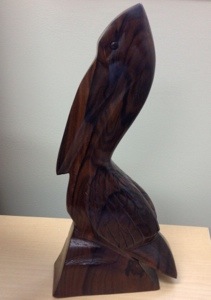
20140306-163721.jpg

Posted in Lent 2014, Spiritual journey | Tagged , , , , , , , | Leave a comment

Lent 2014: Cultivating Sacred Space

It was last year, on Ash Wednesday, when I started this blog at the end of my work day. All that day, I had been recalling the memory of My First Ashes. I am fairly tech savvy because of some experience integrating technology into my teaching. But, I had never blogged before on any personal subject matter. My work life and my personal life…particularly my faith journey…were two separate things. At that time, a barricade existed between them. But, something was happening in my spirit that I couldn’t ignore.

The urge to write was relentless. My story wanted to be released. I sat still. I closed my eyes. I breathed deeply. I wrote. Words flowed, and I was transported back to those moments for all their lessons, all their mystery, all their divine points of light.

That is when the name of my then-nameless blog came to me: small points of light.

My small points of light are the times that I have caught a glimpse of the divine in my life: moments of awe, awareness, questioning, wonder, realization. Being open to re-experiencing and writing about these moments has been a transformative experience in my spiritual life. My worlds of work, faith, family, life have come together. Different stories resonate with different people. People I never even knew have started reading and conversing with me. People I thought I knew have become more aware of who I am, and respond to me in ways that are authentic and affirming. This blog has been a gift to me, fundamentally changing and deepening my relationships with others, and deeply reaffirming my relationship with God.

During the past year, I have learned to cultivate sacred space in my life through writing, reflecting, and sharing. I am so grateful for all the blessings that have come into my life during this time. So, in Lent 2014, I am giving back.

This year, I will be Cultivating Sacred Space with my faith community, and in virtual community with whomever wishes to join. This virtual space is easy to use, interactive, and open to everyone…one does not need to be a member of a church, an Episcopalian, or even identify as “Christian” to participate. God meets us where we are, and when we cultivate sacred space in our lives we begin to see God’s presence in new ways, each of us on our own journey.

Each week in Lent, I will introduce a new theme. An interactive image will lead you to seven practices during that week, one for each day. These practices can be followed in any order. I have a linked blog, “Sacred Space at St. Thomas” where you can leave comments as part of virtual community. I will be blogging here, and on that site concurrently, throughout Lent.

Please join me in this 40 day journey of Cultivating Sacred Space:

Cultivating Sacred Space: An Introduction

All are Welcome

Cross-Reference:

http://stthomasrichmond.org/article/cultivating-sacred-space-lenten-online-faith-formation-2014

Cultivating Sacred Space: Introduction

20140304-211131.jpg

Posted in Lent 2014, Spiritual journey | Tagged , , , , , , | Leave a comment

Fashnacht

There are so many names for this day: Fat Tuesday, Mardi Gras, Shrove Tuesday, or as it was when I grew up, “the day Gramma made doughnuts.” In fact, it was one specific doughnut…the fashnacht…that was a staple this time of year in the bakeries near the Pennsylvania-New York border. My family had German heritage in our mix, and the German and Pennsylvania Dutch influences featured heavily in our community and family traditions. I didn’t really make the connection between fried, flat dough and the coming of Lent until much later. But fashnachts were a perennial favorite, whether or not connected with religious observance.

I recall one time…whether it was Fat Tuesday or not, I’m not sure…when my Gramma’s country kitchen was filled to overflowing with doughnuts. The fry cakes were hot, crisp on the outside and delightfully doughy. I would stand at her counter and cut round shapes with double cutters that allowed each round to have a doughnut, and a hole, to fry. Then, I would clandestinely visit the kitchen “on my way to the bathroom” and sneak one after another as they cooled after frying. I remember her chuckling and pretending not to notice my bulging cheeks.

My Gramma’s doughnuts were braids, twists, “long-johns” as well as traditional rounds and holes. Fashnachts were a specific shape: square and flat, and punched down in the middle, which would fry up crisp while the edges remained chewy and doughy. My mother would rave about her own aunts and great aunts making them. It was a decadent tradition, and I was always happy to visit and indulge on donut day.

This morning, I was thinking about fashnachts, so I woke up early and attempted my own fashnacht making experiment. We have snowy weather again, and the University was on delay. It seemed like the perfect day to make the attempt. I raised up some dough, heated up just enough oil to drop two at a time into my pan, then sprinkled the hot dough with cinnamon sugar and powdered sugar, all before my daughter woke from her snow-day sleep in. I was thinking of my Gramma the whole time, one of the many women who cooked and made special this celebratory day before a shift back to daily routines of the coming of spring, and perhaps an even more stoic and serious season of Lenten observance. These traditions still mark the seasons of our lives.

I enjoyed my fashnacht this morning; mine were not as good as my Gramma’s original, but it was still a delicious walk down memory lane. I am in a state of preparation for the next season, too. I may have a little indulgence today, but my spirit is actually craving the transition to Lent, starting with Ash Wednesday tomorrow.

So, on this Fat Tuesday as I eat my fashnachts, I ponder what is coming next. I know that I will be “Cultivating Sacred Space” in virtual community this lent, and this blog will follow that journey, too. I won’t be giving up anything in particular, but I will be moving into a time where my first priority is cultivating space for the sacred in my days and listening in stillness to better understand the paths that are unfolding in my life. It is a reflective journey during a season where we prepare for growth, shedding what no longer serves us to make room for rebirth. I hope all who read this blog will consider cultivating that sacred space with me.

Sometimes, like this Fat Tuesday, I picture the divine spirit of grace as rather like my Gramma…preparing a whole banquet that is spread out before me and chuckling as I sneak my little doughnut holes, as if saying to me with a twinkle of the eye, “don’t you see…all this is for you!”

May we find the eyes to see, the ears to hear, and the hands to serve throughout the coming season.

20140304-201326.jpg

Posted in work and life | Tagged , , , , , , , , | Leave a comment

Juxtaposition

There is something about the coming together of opposites that attracts me. I am drawn to juxtapositions, and make my home at the coming together of seemingly opposing forces. My astrological chart would suggest it might be related to my Gemini nature, but I think there is more to it than the alignment of stars or the make-up of my genetic code. Walk with me for a few moments down this road; if it helps, begin by taking a peek at the scene in Central Park (attached to this post) that greeted me this morning.

Let’s begin with the fact that I have had a whirlwind mini-vacation the last two days, right in the middle of two of the busiest weeks of my semester. This trip was built around seeing a concert, so the dates were admittedly pretty fixed. But, a short 48 hours of respite in the middle of intense work didn’t diminish the meaning of the time. In fact, it enriched it. It made me savor the moments and embrace the quality of time like a limited, precious oasis of city-scapes and artistic indulgence. As I type this, I am realizing that my family and I had our feet on the ground in New York City for exactly 24 hours. During that time, we visited Times Square, dined and drank in an Irish Pub, toured Lincoln Center, went to an incredible concert by Mary Chapin Carpenter with the New York Philharmonic, ate some (admittedly mediocre) late night Chinese food, had a drink in the lobby bar while watching a woman wearing six inch metal spike heels take “shoe selfies” (sorry, but that was memorable), slept a few hours, had breakfast in an amazing little organic coffee shop, walked the length of Central Park on a clear, winter morning, and capped it off with a visit to the Guggenheim. Now, riding the train back home, I am probably more content and less restless than I would be if I had been gone a week. Juxtaposition: shorter time, higher relaxation.

I was thinking about this as I flipped through the pictures that I took during this trip. This one in particular seemed to capture it all. The rustic, natural beauty of trees in winter captured in a juxtaposition with the city skyline. The same image contrasts beaming light with deep shadows. It is the contrast that draws me in. One without the other is pretty, perhaps. But together, there is a different depth and meaning altogether. Creating unity out of that which has been dichotomized: that is true art and deep spirit.

I am thinking about this as my train lumbers along the rails toward home tonight. My love of both reason and mystery. The interconnected twists and turns of grief and hope. My embrace of science and love of art. Writing for peer reviewed journals with impact factors, and blogs where I bare my soul and then hit “publish” for anyone in the world to read. Private, soulful contemplation, and public speaking and teaching. Even the richness of religion and spirituality, neither of which was complete for me without the contrasts of the other. Divine Light shines in the juxtaposition.

20140301-185338.jpg

Posted in quotations and reflections | Tagged , , , , , , | 2 Comments

Motto

The love you liberate in your work is the only love you keep.
–Elbert Hubbard

A few weeks prior to my dissertation defense–after I had met with each committee member, made countless changes, lived night and day with the pages of writing and calculations as my constant companions–I began to occupy my mind with details of the big day. It made me nervous to keep rehearsing, so I occupied my mind by pondering what thank you gift I wanted to give my chair and committee members. One day, while avoiding mental anguish during the final countdown to dissertation, I knew what I wanted to do. I wanted to give each of my mentors a copy of my personal motto, “The love you liberate in your work is the only love you keep.”

This motto is attributed to Elbert Hubbard, the founding member of the Roycrofters. For those less familiar, the Roycrofters were a group of artisans who lived in rural, upstate New York near where I was raised. The Roycrofters were part of the Arts and Crafts movement of the early 20th Century. This movement focused on the integration of “Head, Hand, and Heart” in a way that produced high quality crafted products with a philosophical and even spiritual dimension of meaning. The Roycrofters emphasized personal, high-labor quality production as a revolt against rapid, mass-produced industrialization. The care and time with which products were made imbued the items with the spirit and care of the crafter. The works of the Roycrofters are classic, beautiful pieces of American furniture, pottery, and metal work.

I grew up a few miles away from the Roycroft campus, but the movement really wasn’t part of my awareness until my adult life. There was a deep, secular humanism within the Roycroft movement that was spoken about skeptically in the deeply religious circles in which I was raised. I was an adult before I found deep appreciation for the aesthetics of the arts and crafts movement. I have learned that the Roycroft campus once temporarily housed the worship space of the church in which I was dedicated as an infant (that is the ritual used instead of infant baptism in some churches where baptism is a chosen rite reserved for adulthood). I even remember pieces of furniture in the church where I was raised that bore the classic Roycroft design and logo. Roycroft artisans produced works representing quality, excellence, and the simple beauty of hard work done well. I truly believe that it is not just our genes and our families that shape who we are…our environment shapes us, too. In palpable ways, I believe the Roycroft environment helped shape who I am: the spirituality I find emerging within productivity, as well as my foundational identity around work as vocation.

Given that history, it is not surprising that nearing the end of the multi-year research project that was my dissertation, this motto became my constant companion. I sat for long hours, calculating and recalculating my data, or writing and re-writing my findings. I met with the statistician who advised me to conduct multiple attempts at the same result using different calculations to insure I reached the same conclusion. I met with each committee member who brought their own expertise to bear on my research, and I refined my knowledge further. It was as if I was sanding and polishing the product with finer and finer grades of abrasives, allowing the true beauty of the final product to shine through.

Looking back, it makes perfect sense that I had to find the motto to give to my mentors in the academic trade I was learning. I managed to track down an arts and crafts letterpress that produced sets of cards, of which this motto was one. They wouldn’t sell them to me individually. So, I bought six packages of cards which blew my entire gift budget. So be it. They would at least get a card. Later, I found little glass ornaments in the shape of the eye-in-hand in our local art museum that drew me. I realized that these could either be considered as a symbol for being visionary, or for warding off the evil eye. I decided either might be fitting for dissertation committee members, so I added these to the gift. I did get a few odd looks about those. But, the motto universally was appreciated.

I still have my own copy of this motto, framed, in my office. I don’t always feel like my daily labors are filled with love; that would be virtually impossible when I am embroiled in academic politics, or writing the fifteenth iteration of a goal based budget, or responding to the revision of the revision of the revision of a manuscript to integrate minutia-laden feedback from a journal reviewer. But, my motto is there to remind me that these tasks are part of the refinement process, too. My vocational work: my teaching, my writing, my scholarship, my ministry: here I strive daily to liberate love.

The second half of the motto, of course, reminds us what love is for: giving it away. Finishing our work and releasing it to the Universe. Trusting that the “so what” question will be apparent in our results. Giving it to God. However we say it, it is what we must do. Let it go. Allow the wings of our efforts to take flight and carry our work to new places. Liberate the love, without controlling its destiny.

The promise is, we get to reap the reward, to live into the depths of the love we liberate. In giving, we receive. In giving deeply, we receive richly.

Today, as I work with my own doctoral students, this motto takes on deeper meaning. My investment in them isn’t about the product they produce, or the grade they receive. It is about the meaning created and released in the work we undertake together. It is about the quality of the relationship, and the strength of shared knowledge, and how our work together refined that. When we liberate that love in our work, we gain so much more than we give.

20140226-110141.jpg

Posted in work and life | Tagged , , , , , , , , | Leave a comment

Asking

Tonight is a quiet night in my house. Homework is happening upstairs, and the news is on in the next room. I have work I could do (as is generally the case). But, I am feeling so much awe…ordinary, everyday, “small point of light” awe…that I simply have to write. What I am in awe about tonight is the power of asking.

Let me back-track a few weeks. During my monthly meeting with my spiritual director, I was updating her on some contemplative work I was doing, re-living and re-experiencing some moments from my past in preparation for writing about them. She said something simple, but profound: “Remember, you can always ask for help.”

Yes, I could. And, I probably should. The problem is, I usually don’t.

Why is it that asking is so hard? I was raised with a high degree of independence and perhaps even pride about stubborn self-determination. That has served me well in a lot of ways, personally and professionally. It always occurs to me to do whatever I can on my own first, and only ask for help when I really need it. I would help anyone else in a heartbeat. But, it has been harder for me to ask. I am learning the importance of this in practical, daily ways and in ways that help my professional development. But, I still wrestle with asking.

Since receiving this loving suggestion, I have been intentional in asking for help with a few things this month. Whenever I have asked, I have received beyond what I could have imagined, in serendipitous and divine ways. Let me write this in the style of one of my favorite children’s books, “When You Give a Mouse a Cookie” which seems only fitting for the divine comedy of overflowing grace and gratitude that I have been experiencing:

If you ask for a suggestion of a place to write, you will learn about secret corners of a place you thought you already knew well, and you will realize that you are connected to that space in spirit, and companioned even in your solitude.

If you go to that place to write and ask for divine inspiration, words will flow out of you like water that quenches your soul. You may think at that moment that you received what you asked for, but have no idea so much more is yet to come.

If your inspiration spills over into the rest of your life, you may start on a new project that weekend and ask a few friends to take a look.

If your friends encourage you, you may be inspired to step out on a limb and write more. You may be asked to share your work with others. Your work may be noticed, you may be interviewed, and others may begin to see more clearly and fully who you really are.

If all these words and projects flowing from you remind you of something you read by a famous author that inspired you, you can go to that author’s website and ask that author to send you a signed copy of her latest book (instead of just ordering it on amazon). In the process, you can share the story of what that author wrote which spoke to you.

If the author writes back to you, thanking you, then you can ask her to visit your blog and take a peek at your latest projects.

If the author does read your work, she may be moved by one of your stories, just as you were with hers. And you may find yourself writing back and forth with the author as if you were familiar friends, encouraging each other. And, you both may be deeply blessed and grateful for the exchange.

If you find words flowing from you in these ways, others may notice. You may ask others to read your work, and they may share their work with you and ask you for feedback, too. You will learn from each other, and you will support each other. And many more people than you ever realized will be moved by what all of you have written.

And, one evening in the quiet comfort of your home, you may realize that you are no longer sitting alone, contemplating writing in your solitude. You may find a beautiful community has emerged, beyond what you could have asked or imagined.

And if you ask, you will know in the stillness of your heart that great works are just beginning, and there is always more yet to come.

You asked, and you received.

And you keep receiving.

Posted in work and life | Tagged , , , , , | Leave a comment

Against the Grain

The Provost sat behind his oak desk, which had a noticeable wood-grain pattern. As I waited, my thoughts followed a line which began at one corner and meandered across the length of the desk. Before the tree that furnished this wood had been harvested and constructed into furniture, that same line once marked a pattern of growth. The desk’s owner was sitting across from me, reading and frowning as he read the single sheet of paper I handed him. He paused to look at me, and my attention moved up from my intense exploration of the oak veneer to meet his gaze.

“You don’t actually need my signature,” he said. “No one even uses this form anymore. All you need is a transfer.”

I knew that was true. I had been accepted to another University, and I simply needed to request my transcripts. But, this meeting wasn’t about my academic status. He knew that, too.

“I wanted your time, not just your signature.” That truth seemed to get his attention. “I hear that you said the values of Social Work were incompatible with Christianity. I disagree, and I wanted to explain the rationale for why.” My intention was to move into a well rehearsed speech about the radical inclusion reflected in the teachings of Jesus which ran counter to the culture of the place and time in which he lived. I was about to begin with an argument grounded in the writings of Peter Berger and planned to move on to contemporary theological applications of social action which mirrored the historical foundations of Jane Addams and the settlement house movement. I had spent the past year reading, studying, and forming my own understanding of the spiritual and vocational shift that was taking place in my life at that time, the dawning of my second decade. I was prepared to discuss it in a manner befitting the academic standing of a Provost.

I wasn’t given the opportunity, though. The Provost leaned across his desk and said, “The decision is made. It’s final. We are not having a social work major here.”

“I want you to tell me why.” I said. I was feeling bold: I was a Sophomore (thus, I thought I knew everything) and I had already effectively, and successfully, transferred from this “Christian” College to a public University. The developing Social Work program here had come under fire during its first accreditation attempt for one reason: the school’s refusal to not discriminate based on gender or sexual orientation. I knew this was the reason, but I needed this man to say it. I wanted him to hear his own hypocrisy. “This school is founded on Christian Values, and that is all there is to say.” Indeed, that was all he would say. No logical or critical reflection was allowed; that defensive, rigid veneer was it for him.

He signed the paper and handed it back to me. He didn’t rise. He didn’t shake my hand or wish me well. He didn’t even acknowledge me as I rose, thanked him for his time, turned, and let myself out.

Like the tree that furnished wood for his desk, my growth had also been sliced through. I felt this truth viscerally, deep in my soul, as tears welled up in my eyes once the interview had ended and I was alone. I was still wounded from those blades, the sharp losses that had severed my spiritual life from my professional development. The argument I would have made to him if I had been granted the opportunity to do so wasn’t even from religious conviction. My faith had been ripped from me already. My dearest friend had been cast out from religious community when it was revealed he was HIV+, my most challenging and thought provoking faculty mentors were asked to leave for allowing young adults to question accepted “fact” through critical dialogue, I was told I was flawed to my own core simply for loving who I loved, and now the profession of Social Work that had reached out to embrace me after the church abandoned me was itself banished from the school I was attending.

I had aligned myself with the outsiders, those who were cast out, the persecuted, those who were discriminated against. It reminded me of another historical figure, one whose name the people doing the discriminating seemed to toss around pretty freely. The guy who hung out with social outcasts and debated the meaning of holy scriptures with women, and fish catchers. The one who questioned tradition, who argued with the leaders, who used critical questioning and metaphor to encourage people to get at deeper truths instead of superficial meanings. Yeah, that guy. The same one who, if those stories were true, would certainly not appreciate his name being used to justify discrimination.

On my walk across campus to pack up my dorm room, I walked by the pristine pillars of the John and Charles Wesley Chapel. They looked like giant bars. I wondered: were they trying to keep something out, or trying to control something they were afraid might slip away?

Earlier that week, I had written a letter to the church to which I belonged at that time asking to rescind my membership. I originally considered asking to rescind my baptismal vows, too, but later changed my mind. I didn’t really have any animosity toward Jesus himself, nor his teachings. I would give him the benefit of the doubt, and recognize my heritage. Like it or not, it had formed me to this point. Maybe I would have hung around and fought for justice in the church as I once thought I might, but I wasn’t willing to use the Christian label any more. It had been tarnished beyond repair for me, no matter what color it was stained and how much it was polished. Call it whatever you want, but discrimination in the name of religion is still what it is: discrimination. Hate. Dismissal of the divine spark of life and potential inherent in every human being. I wanted no part of that, even if it cost me my faith.

Ironically, I now realize justice is where my faith has lived all along. Over time, each has fed and strengthened the other.

Now, it is twenty-five years later. As if we are children who have to keep repeating our mistakes, we are still trying to mix religion and discrimination. I read today about a group of people in Arizona who have taken their polished veneer of religion and convinced the state Senate (via SB1062) to use it to make discrimination look nicer, more appealing, all glossed over just because they applied their understanding of “God” to their hatred and fear. Jesus would not be pleased. Incidentally, neither would the Buddha, nor hundreds of spiritual and religious leaders across multiple traditions who understand that no one benefits from discrimination and hate. In fact, it is discrimination and hate that keep us from a knowledge of divine love and grace, in all the beautiful and multi-faceted ways in which the religions and spiritual traditions of this world allow us to experience and express.

Where is the small point of light in this? It came to me today as I signed a petition to veto SB1062 in Arizona. I added my name, and a favorite quote from the Rev. Dr. Martin Luther King, Jr., “Injustice anywhere is a threat to justice everywhere. We are caught in an inescapable network of mutuality, tied in a single garment of destiny. Whatever affects one directly, affects all indirectly.” Dr. King knew a thing or two about religion, and about politics. He understood deeply that any form of discrimination of people against people pulls us away from the knowledge and love of the divine. Putting that into law further separates our civic and our spiritual lives. Why must great leaders and teachers die to convince people to take that seriously?

The small point of light in this story is in the wood grain that runs through my memory. I have learned that it is worth it to go against the grain, to trust and invest in the divine dignity and worth of every human being. My Social Work ethics tell me this. The baptismal covenant of my own faith tradition reminds me of this. My respect for and worship alongside diverse family and friends convinces me of this. My calling to a life of vocational ministry that mixes social justice, human compassion, and divine love is a response to this.

May our religion and faith not lead us to discrimination, but invite us to the grace and growth of inclusion.

If you are interested in signing the petition to ask Arizona’s governor to veto SB1062, you can visit: http://www.change.org/petitions/gov-janice-brewer-veto-sb-1062

Posted in work and life | Tagged , , , , , , , , , | Leave a comment

Mid-Winter Tea

My colleague and I were having lunch today at a favorite local Thai restaurant a short walk from our office. We both ordered jasmine tea, enjoying sipping over lunch and conversation. It was a simple, lovely moment in the midst of a work day. I had forgotten my phone in my office, so I was more relaxed than usual, blissfully unaware of what email may be filling my inbox. It felt good to be even temporarily untethered.

There is something so civilized about sipping tea. I was thinking about this tonight when a story suddenly came to mind about another mid-winter tea sipping.

I was living and working in Buffalo that never-ending winter. Snow piled up, inches at a time and day after day. I was so bored of my snow boots, so tired of the same sweaters and pants. I had a favorite dress that I liked to wear with mid-calf “granny boots” that had a mid-sized heel in a curvy shape. These were not winter boots, not Buffalo winter boots at any rate. But, I wore them anyhow and justified to myself that I was mostly in the office all day. It had snowed all night, and it kept snowing all day.

I worked for Hospice at the time, on the bereavement counseling team. We saw clients for community counseling in the office, and went out to make home visits for families that had been served through Hospice. On this day, I arrived to a pile of messages from several clients who were wanting to reschedule. As I reviewed my roster, I realized my one scheduled, remaining afternoon appointment was a home visit with a Hospice bereavement client, who had been the caregiver for her sister who had died a month earlier. I looked at my shoes and realized I was ill prepared for home visits on a snowy day.

I called my client, to let her know the office was open, but I had cancellations and I could come earlier than planned if she would like. I was secretly hoping she might reschedule, too. But, instead she said she was especially looking forward to the visit since she had fallen and broken her leg just after the funeral, and hadn’t been able to get out. In my mind, she sounded lonely, and my selfishness emptied into professional compassion. I said I would be there early afternoon. She warned me her steps had not been shoveled.

I thought about going home and changing, but she lived on the other side of the city. So, I set out for her house in the blowing snow and slippery roads. I arrived at her address to see what looked like an igloo piled up in front of her door. I wished I had a shovel, or at least, real boots. As I climbed the mountain of ice and snow to her front door, I felt a disconcerting slip of my footing and a sharp “crack” as I looked down to see the heel snapped off my fancy boots.

In action films and commercials for super-powered chewing gum, the brave heroine would snap off her other heel and boldly go forward to conquer the snow drift. In real life, your bare heel is exposed to ice and snow while the faux leather hangs off your shoe like a pathetic tail which will not rip off under any amount of pulling. I scooted myself to the door with a freezing cold foot, using the other heel like an ice-pick, and made it into her entry-way. She lived on the second floor and said to come upstairs and knock on her door.

I clomped up, and wanted to be as unobtrusive as possible. I had visions of an elderly, shut-in woman with a broken leg…a vision that filled my mind with sympathy and neediness. The woman who answered the door was strong, radiant, wearing an ankle cast but carrying a steeping pot of tea. She embraced me like an old friend, even though our contact had only been through mail and phone until that point. I said I would take off my boots and she waved that idea away, “come right in, no need, no worries…keep your feet warm!” I tried to hobble in without drawing attention to my predicament. We walked through her kitchen to her living room.

There, she had set up for us an exquisite tea, in delicate, paper-thin china cups that the green tea made radiant with warmth. She smiled from ear to ear, “I could only imagine what you had to do to get here. It means so much to me. We can talk all about my sister later, but first, let’s have tea.” She went on to tell me of the years of her service as an army nurse. She geographically situated her tea cups and teapots (and tea leaves) from far-reaching corners of Asia, gifts she had sent to her sister over the years, as it was in her sister’s home that she was currently residing, and in which we were presently visiting. We sipped and talked about life and travel and culture like old friends.

My client was a magnificent human being who had lived a fascinating life. She had moved here to care for her sister, decided to stay on a while longer after her accident to settle her sister’s estate, and would soon return to her own home, friends, and community in another state. She knew if we didn’t meet today, the meeting would likely never happen. She was craving closure with her caregiving, her time in this community, her life here. It was incredibly unexpected; she was hosting me as a guest of honor when I thought I was coming to serve her needs. We both had empathized with the other’s predicament, instead of our own. We eventually spoke of her sister, and I listened to her stories, her memories, her caregiving, her missed conversations and “what ifs” and pangs of grief about their relationship over the years. We covered a month of counseling visits over pots of tea that mid-winter afternoon. Were it not for my cancellations, I would never have had the luxury of time I could offer, or enjoy, that day. The afternoon passed, and the sun began to fade. We suddenly realized our visit needed to close.

At the same time, we both noticed my broken boot. She looked and said, “oh no! That happened getting to me!” I had tried to hide it, and I tried to brush it off again now. Finally, we just laughed. “I am a country girl who lives in snow country and I should have known better than to wear these today!” She found an old pair of boots…wrong size, but workable…in a closet. I gladly accepted the gift in order to climb the snowbank, and I thanked her for her tea and hospitality, as she thanked me for listening and companioning her journey.

In retrospect, I should have thanked her for a mid-winter afternoon of world travels that melted the snow and warmed my spirit. But, I could see on her face that we had both received gifts: time, listening, human connection. In fact, I think we were both graciously bestowed gifts by the Universe that day. Sometimes, one intersection of a person into your life can leave a truly lasting impression.

A small point of light, over shared mid-winter tea, was shining brightly on both our paths that cold winter day.

Posted in work and life | Tagged , , , , , , , , , | Leave a comment

My Funny Valentine

I am a huge fan of vintage paper, and especially valentines. In years past, every flat surface of my house has had cards from the sentimental to the hopelessly tacky displayed on it. There is a special place in my heart for the “double entendre” genre of vintage paper, young couples riding together on rockets that say, “You make me want to blast off” for example. For years, my spouse and I have been in competition for the tackiest array we could find for each other, from the tastelessly over-traditional to the nerdy professor giving love advice. I even have a whole kitchen series, with captions like like “let’s dance to the tuna wedding bells” and “you’ve got a pizza my heart.”

I realized only this morning that we hadn’t put any of our usual valentines out. I opened two storage boxes and sat down by the lovely vase full of red, pink, and white tulips that my spouse had sent to me the day before. They were accompanied by a great bottle of wine and a modern card on an office theme, “I love you a hole punch.” This was especially appropriate since I have been working from home a lot more lately, given our bizarre southern weather and frequent school cancellations. I sifted through my vintage collection and found two snow themed vintage postcards that were perfectly suited to yet another southern snow day to display with my flowers. It seemed too late to set out more.

Valentine’s Day is a funny holiday. It is loathsome to those who have been scorned by love, and sentimental to others. It has childlike glee, and adult overtones. It can be a day that marginalizes people who don’t fit a certain norm of sexual orientation or gender expression. It has the name of a saint, but is used to sell lingerie and erotic merchandise. It may be the epitome of of human extremes, the desire to be fully loved and the fear that no matter what we do, we will never really be loved enough.

As I sat there today, looking through my boxes of vintage papers, I was caught in the juxtaposition of it all. A part of my soul celebrated the news-breaking federal count decision striking down Virginia’s ban on same sex marriage. Meanwhile, this same afternoon, I knew my own partner was paying his respects to a former student, now in high school, who had ended his own life apparently unable to fathom that it could get better for him based on who he happened to love, and how he identified. We have come far, but have so far to go. I couldn’t help but struggle and wonder, when will love win out over our fear and self-righteous judgment?

I wished every human person could simply feel as light hearted and loved as these silly valentines.

I decided my funny valentines would remain tucked away this year. I didn’t have the heart to put them out today, even though I enjoyed looking through them, laughing, and knowing they would find their way to my usual decorating cycle again in the future. Instead, I prayed. I thought of all the people…men and women…that I have loved both romantically and in deep friendship over the years. I sent out my love, my heartbreak, my crushes, my longings and my admiration for them to the heavens. Our love makes us deeply human, deeply lovable and deeply loved. The real Valentine gift is that we are loved, deeply and profoundly, exactly as we are.

May that love find you today, and always.

20140214-211021.jpg

Posted in work and life | Tagged , , , , , , | Leave a comment