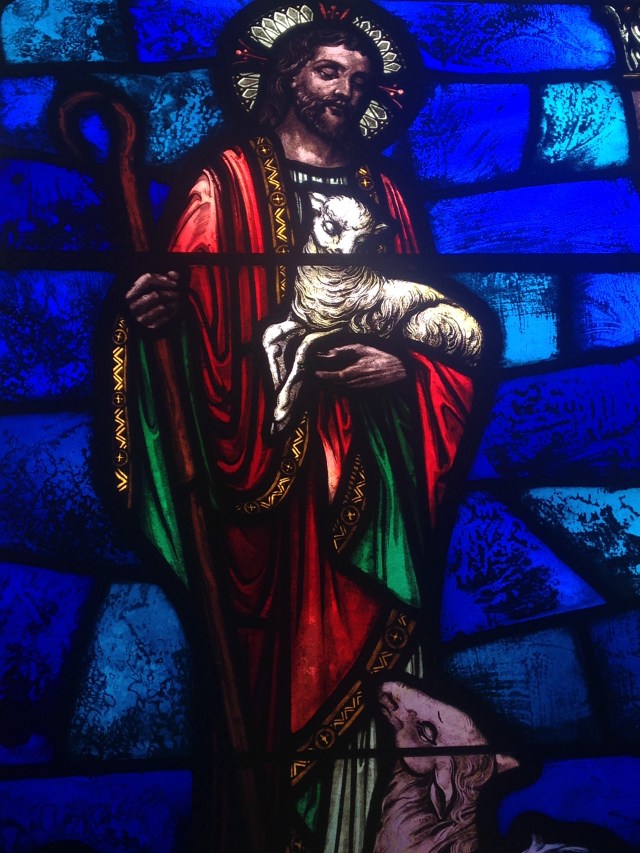
Seeing through new eyes…

via Healing Welcome

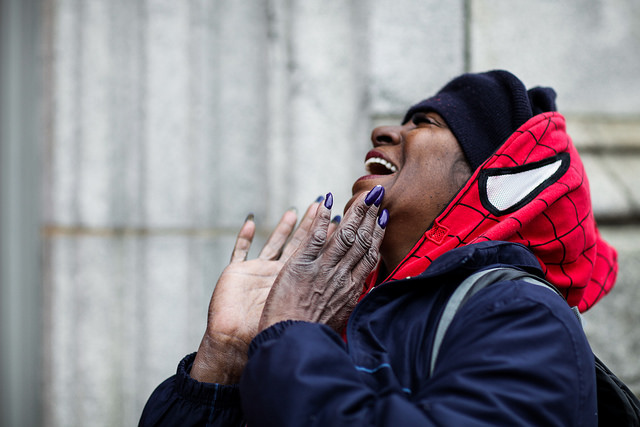
I had an opportunity to participate in an interview for my own project, Faith from the Margins to the Web.  It always amazes me how these things work: something will happen (in this case, someone canceling with a cold).  I’ll initially panic and wonder what I’m going to do, and then in the calmness I’ll just realize that it will all be well.  On the day of this particular interview, I ended up leading Dale into the quiet chapel and filling in for the missing interviewer.  As soon as we began to speak, I knew beyond a doubt we were meant to be in that space, at that time, opening up this conversation with each other.

Seeing the light of my own ministry through the eyes of a person who is blind was an unexpected gift.  I share this small point of light with you, since it illuminated my own path.

Many blessings on this evening of the Fifth Sunday after the Epiphany!

Sarah
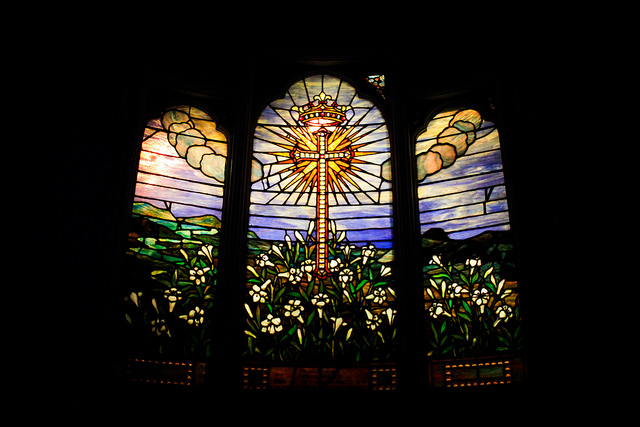
healing light

Epiphany 5, Year B

Set us free, O God, from the bondage of our sins, and give us the liberty of that abundant life which you have made known to us in your Son our Savior Jesus Christ; who lives and reigns with you, in the unity of the Holy Spirit, one God, now and for ever. Amen.

Mark 1:29-39

After Jesus and his disciples left the synagogue, they entered the house of Simon and Andrew, with James and John. Now Simon’s mother-in-law was in bed with a fever, and they told him about her at once. He came and took her by the hand and lifted her up. Then the fever left her, and she began to serve them.

That evening, at sundown, they brought to him all who were sick or possessed with demons. And the whole city was gathered around the door. And he cured many who were sick with various diseases, and cast out many demons; and he would not permit the demons to speak, because they knew him. In the morning, while it was still very dark, he got up and went out to a deserted place, and there he prayed. And Simon and his companions hunted for him. When they found him, they said to him, “Everyone is searching for you.” He answered, “Let us go on to the neighboring towns, so that I may proclaim the message there also; for that is what I came out to do.” And he went throughout Galilee, proclaiming the message in their synagogues and casting out demons.

Co-authors:  Dale and Sarah

Dale and I sat together in the chapel as we opened up this Gospel lesson together.  I hadn’t spent a lot of time talking with Dale  until today; he is the friend of several others who attend Red Door lunch and healing service regularly.  We’ve exchanged pleasant hellos but we hadn’t really talked.   Today, our bible study numbers were a bit uneven, so I filled in at the last minute.  What a blessing that serendipitous decision turned out to be!

As we began, Dale asked if I would do the reading since his eyesight kept him from being able to read out loud.  I noticed, even from the intent way that he listened to the Gospel, that he was hearing every word with a clarity most of us miss.

“I like that reading, I do” said Dale.  “I didn’t get that part before but this time I heard that James and John were there too.  Jesus was there, but the others, they had God’s word there with them.  I wonder, did they have power or something, like Jesus, to heal?

“That’s a great question, Dale!  I hadn’t even picked up on that.  Jesus does say at other times to his disciples that they have the power to heal, that Jesus gives others the power to heal in His name.  You know, I think about that a lot.  On Fridays here, when we have the healing prayer service, that’s something that is powerful to me when I say it each week before we offer prayers together in Jesus’ name.  I don’t have the power to heal.  It’s not like that, like a magic power or something, but when we hold a healing prayer service we pray together because we have been told that there is healing in God.  I’m not in charge of that healing: giving, or receiving healing.  But healing is there with us when we are gathered together because God is with us.  So, when we stand together, when I pray with people, it’s in the presence of that healing that God is made known to us.”

“You know, I believe that” said Dale.  He continued, “…because back in 2012, when I lost my eyesight from glaucoma, I was blind totally for about 18 months.  I went to the eye doctor and he said there wasn’t much hope.  I was imagining never seeing again, learning to read braille and stuff.  Then the doctor said, ‘there is this surgery, but its really 50/50 whether it will work or not.’  But, I thought, ‘I’m already blind, what do I have to lose?”  So, I had the surgery, but then there was nothing.  Six months went by, nothing.  Then one day I thought I saw light starting to come in.  So I started to pray, not begging but just feeling thankful to see light again.  And other people, they started to pray for me.  And always, those prayers were in the name of Jesus Christ.”

“That’s wonderful!” I said, “I think about that whenever we pray.  I may pray, I may ask, but we are asking in the name of Jesus Christ who is with us all.”

“Praying, you know, it’s like blessing.  We get blessed, we feel blessed.  But it isn’t about that.  It’s about passing along that blessing, that is also in Jesus’ name.”

Something else stood out for me, too.  “I keep going back to this part…about Simon’s mother…who is healed and then gets up and starts serving everyone.  At first I want to say, “hey, let the poor woman rest!” and then I thought about it.  She chooses to serve.  That is a show of love, a gift of family and community.  That is an action of thanksgiving and grace.  We can never say ‘thank you’ enough for our healing so we do what we do best: we serve as healed people, showing our thanks to God.”

Dale nodded.  “You’re right, because her way of serving, her way of saying thank you was to keep serving.  I’m just like her.  I wake up and keep seeing God.  My eyesight isn’t all back, but it is clear enough now that I can see light.  When I wake up, I say thank you God, because that light makes me know that God is there in that healing. And then I want to get out, and to serve others.”

“It’s like our thanks, our blessing, our healing are all together” continued Dale.  “I don’t know which is the right word to use.  But maybe they are all part of the same thing.”

I thought about this.

Dale went on, “Maybe this blessing falls to us, because it is so present with us.  I ask myself, ‘how do I live into this blessing, this healing’ and I see that here in this place.  Here, there are a whole lot of people who feel shame and hunger and think they will be looked down on.  But they come here, and there is healing, and there is food, but there is also spiritual healing where we are fed. I’m surprised sometimes by who I see come into that service.  But you are never surprised…you just show love to everyone. I see that in you.”

I felt myself smiling; I was blessed by hearing this, but I knew the story was deeper than Dale probably realized.  So, it was my turn to share.  “You know, Dale, there was a time that I was one of those people who was least likely to come into a church.  You see, I was mad, angry.  Really angry.  Then, one day I decided to just go to a church not because I had to but because I wanted to…actually because I wanted to sing.  And that day, the clergy person seemed to just look right at me.  Instead of feeling judged, I heard him say, “All are welcome…you are welcome.”  I felt that in my entire soul.  I knew that welcome came from more than just that person; that welcome was from God.  That welcome was God.  And in that welcome is where I found healing from all that anger.  Slow, just like your eyesight!  But gradually, the light comes back in and we are filled with thankfulness and gratitude.  So, I want to live into that now.  I know there are people every week who come here feeling broken, angry, and not welcome.  I know exactly how that feels.  So, I stand in that place of healing I have known, and I pray.  My prayer is always that I can offer up that healing and welcome to others, too.”

“I notice that too” said Dale, “when you all say the prayers, you always say that at the beginning.  You know you are welcome, you can be here just as you are.  Welcome is a gift, and a blessing.  Welcome is healing.  You know, I’m glad this was our lesson today”

I’m glad too, Dale.

Posted in Spiritual journey, work and life | Tagged , , , , , , , , , , , , , , , , | Leave a comment

Five Golden Words…

A homily for the First Sunday after Christmas, Year B
Grace and Holy Trinity Episcopal Church
December 31, 2017

At around 11 a.m. on December 25th, I glanced at my phone and saw a few friends posting their Christmas morning pictures of bleary-eyed toddlers surrounded by mounds of wrapping paper, children in pajamas with toys and books strewn in a million directions and tired teens scrolling through their smartphones while lounging on the sofa. These candid holiday photos were captioned with things like, “It’s not even noon and it’s all over already!” and “Christmas was done and gone before dawn at our house.” It occurred to me that these social media morsels are evidence of a larger, profound truth that I see in play this time of year: our way of being Church together is much more countercultural than we realize.

While cultural Christmas may have ended in department stores, radio stations, and whimsical coffee cups it has not ended here, in this community of the gathered faithful which we have come to call church. Today, we gather in the midst of Christmastide, celebrating the miraculous wonder and glory of the incarnation during these twelve days of Christmas. It’s also natural to reflect on the year which is wrapping up as we prepare to welcome 2018.

Something that surprised me during the past year…a miraculous wonder of sorts…was that my seminary studies taught me to love New Testament Greek. It probably helps that I love the beauty and meaning of words and how they help us express our humanity and our culture. I always thought of myself as someone who struggled with languages, but having a really good teacher accompanied by many supportive prayers and notes of encouragement opened me up to the possibility that this wasn’t just a class to get through, but one that might also truly enrich my formation for ministry.

I also love music…and I am greatly looking forward to the elective in church music and liturgical singing that awaits me this January.  So this morning, like the Old English folk tune, I have some gifts to share this Christmastide. Not twelve…that sermon would be much too long…but instead five golden words…in Greek…from today’s Gospel which radiate light, and life and meaning in this holy season for me.

We know that this Gospel attributed to John was likely the last among the four accounts of Jesus’ life and ministry to be written, and was likely written for a mixed community of people that included Samaritans and gentiles, as well as Jewish people.[1] The members of that early Johannine church community were also surrounded by hellenistic culture and thus, it is not only the history of the Hebrew scriptures, but also the language and metaphor of Greek philosophers that may have coalesced to help express their experience as followers of Christ. Not only now, but even then, Christianity and culture stood in this dynamic tension with each other.

Our reading today is from the prologue of John’s Gospel which begins at the beginning, sourcing the incarnation of Christ in the eternal nature of a loving, creating God from whom all that we know was spoken into being: In the beginning was the Word.

And so, the first golden word of Christmastide is: Λόγος (logos): In the beginning was the Word; the Word was with God; the Word was God; the Word came to be with us. Words give us meaning, nuance, poetry, expression, communication, relationship. In Greek philosophy, Λόγος is the ideal, perfect, pre-existent Word speaking reasoned order into chaos and bringing into being all that we know and experience as light and life. Λόγος is both Word and Wisdom, spoken through the ages and continuing to enlighten, inform, and inspire us as the fullness of creation unfolds.

The Word, Λόγος, took on the form of human life and Ἐγένετο (egeneto), became (stem γίνομαι [ginomai] “to become”). The gift of this word involves a bit of a grammar lesson; in the Gospel reading, the verb tense in Greek [aorist] is different from anything we use in modern English. Rather than “past tense” which implies something is over and done, this “becoming” is situated in history but without a fixed duration; in other words, the Word became and from that action of becoming everything changed, from that moment onward and without end.

…and the Word became…

Σὰρξ (sarx): the fleshy, gritty, realness of being human. The Greek doesn’t suggest that God become some ideal, abstract perfection of humanity. Σὰρξ is literally the flesh which holds our bones together, the very base nature of physical existence. Eternal, almighty God became fleshy, fragile human. God did not become super-human. God came into being as that which God had created, born in all the realities of a human existence…as we know from other Gospel accounts…in a stable when denied lodging; born into the family of a young but bold woman and her trusting, betrothed partner; honored by smelly shepherds and noisy animals with a feeding trough as a cradle. Σὰρξ: the fleshy, gritty realness of being human. Latin American priest and theologian Gustavo Gutierrez translates it best in my view: “The Word become poor and dwelled among us.”[2] Which brings us to the next word:

Ἐσκήνωσεν (eskēnōsen): The gift of this word is in its origin. We may be familiar with the traditional “dwelled among us” or today in the lectionary translation, we heard “lived among us.” But, in the Greek form this verb for dwelling has the same root as the noun “Tabernacle.” The tabernacle was the holy space in which God was to be found and worshipped. God became flesh and tabernacled with us: God makes God’s home in the holy space of our human lives. Our lives, individually and collectively, are now the tabernacle in which God resides.

Δόξα (doxa): The last word gift for this morning is Δόξα: Glory. This is the glory which we have seen and the glory which we, in turn, give to God. We give glory (think “doxology”) in our common worship, in our lives of prayer, in our gathered community. The glory of the incarnation is given birth each time we give that glory together. I was instructed as an adult entering the liturgical tradition of The Episcopal Church to think of each Sunday’s Holy Eucharist as a “mini-Easter”, the reliving of the Paschal Mystery through which Christ has died,, Christ is risen, Christ will come again. But maybe we should also think of every doxology: every “Praise God from whom all blessings flow” and every “Glory be to the Father, and to the Son, and to the Holy Spirit” as a mini-Christmas, a reliving of the feast of the incarnation in which glory surrounds the birth of God-made-human.

Λόγος    

ἐγένετο    

σὰρξ    

ἐσκήνωσεν    

δόξα

Five golden words to remind us to celebrate Christmas in our hearts, and our lives, and our common worship during these twelve days and beyond. Despite all the cultural evidence to the contrary, Christmas is not over. The incarnation, set in motion by the divine word spoken at the beginning of time, still dwells in the holy places of our lives. This will be true even when the tree needs to come down, when the post-holiday clearance sales have removed the last strings of lights from the shelves, when the magi complete their journey and go home by another road, when the holy family makes their way from a stable in Bethlehem to live into the lives they are called to live. The miracle that is Christmas has happened, and continues to happen in our lives and in this community where we gather as Church to give glory together.

Merry Christmas…and Glory be to God: Father, Son and Holy Spirit.

Amen

[1] Adele Reinhartz, “John” in Fortress Bible Commentary, p. 268
[2] Gustavo Guiterrez, The Power of the Poor in History, pp.12-13


Nativity2

“The Nativity”, Lorenzo Monaco; 1409

Posted in sermons | Tagged , , , , , , , , , , , , , , | Leave a comment

Tidings of Comfort and Joy…

Sometimes, it only takes an instant for a small point of light to cut through the ordinariness of days and touch the depths of the soul.  A few weeks ago, I was gathering people for bible study while my friend Patience was photographing participants for Faith from the Margins to the Web.  It was one of those times where tears of joy could simply not stop flowing.  I could feel the warmth of human kindness even as flakes of snow began to fall, and the resonant joy of the season echoed through words and images.  This one, especially for today, is from Mary and Mary Ann who bring us tidings of comfort and joy.

Wishing all of you the blessings of this holy season as I share the special edition Faith from the Margins post for you:

Joy to the World: Faith from the Margins to the Web

Merry Christmas,

Sarah

Mary2


Posted in Poetry and verse, Spiritual journey, work and life | Tagged , , , , , | 2 Comments

Spirit is always moving…

Friends, I must tell you that this latest project of mine, Faith from the Margins to the Web, continues to delight and amaze me.  Today, on that blog I also curate, there is an interview posted in preparation for Advent 2 between two people who I must admit, I was uncertain about pairing together.  I had met one person (a student at the University where I teach) for about 30 minutes total; he liked the project but acknowledged having no background in a faith tradition.  The other person was a regular attendee of Red Door, a person experiencing homelessness, generally quiet and reserved.  I had gathered those volunteering for the project together around a table to do introductions, and then just basically paired people off to do the interviews.  This was the only one I didn’t even get to listen to, as the student also volunteered to transcribe it (which was an amazing gift for which I was grateful!)

When I read it, I wept.  Purely, simply, completely.  I would have never known the stories of these two men intersected so poignantly.  So, I commend it to those of you who read my blog here.  Here, John and LT  are the small point of light for my day and I hope, yours as well:

https://faithfromthemarginstotheweb.com/2017/12/05/camel-haired-messengers-of-god/

24957808618_a9a70bd016_k

Posted in quotations and reflections, Spiritual journey, work and life | Tagged , , , , , , , , , , , , , , , | Leave a comment

The Face I See

A Sermon for the Last Sunday after Pentecost, Year A  (Christ the King)

Lectionary Readings

Sometimes the Reign of Christ looks like a short, hunched-over women with wildly cut hair, sipping sweet tea with lemon, savoring the last bite of cake while mumbling and singing to herself.

At least, that is how Christ the King, in whose presence we gather today in worship and thanksgiving, has been made known to me this week.

Perhaps I should explain a bit more…

In the Fall of 1989, I began the first of many internships that would be a part of my preparation to be a practicing social worker. I had just transferred between schools and so, I was a little late to the registration process. And as sometimes happens, I didn’t get my first pick of internships. I didn’t even get my second or third pick. It seemed to me that the powers that be had gotten things mixed up: I planned to be an administrator and community organizer who was hoping for a high power, influential internship that would land me a great, lucrative post-graduation job. Instead, they placed me in a community board and care home which offered long-term shelter to deinstitutionalized adults with mental health challenges who had spent most of their lives in the local psychiatric hospital. This shelter, a transitional housing facility operated by the YWCA, sprang into being when there was no safe space for people with long-term psychiatric disabilities to live. The place was run-down, with peeling paint and dirty old carpet and very minimal staffing. My first day on the job I thought: I don’t know if I can do this. But, I paused. And even though I wasn’t that active in church at that time, I prayed. I heard a voice in my soul saying, “People live here; You can work here.” That became my motto.

After a few weeks of required training and accompanying staff and volunteers through psychiatric rehabilitation, support groups, and recreational group outings I was given a choice. I could remain a part of this general, residential staff team, or become an individual counselor to some of the more challenging residents. My supervisor hinted that they had plenty of students helping with the groups, but what they really needed were individual counseling volunteers. I heard my lips saying yes while my brain was shouting “No, what are you doing!” But my yes had been said, and so it was that I was on my own. Very quickly, I was handed a name and room number. “Your job,” said my supervisor, “is to get Ruthie out of her room. She hasn’t left it in weeks, except when we tell her she has to bathe.” Great, I thought, a very promising first client. As I headed down the hall toward the residential corridor, she added, “Oh, and don’t take it personally if she swears at you!”

My first visit with Ruthie lasted exactly 10 seconds. I knocked on her door. She uttered several non-sermon-appropriate words followed by “Go Away!” I lingered long enough to tell her my name, that I was a social work intern, and that I would come back to visit next week. I heard her shuffling toward the door and promptly locking it. She yelled, “Go away!” then in a quieter voice said, “Come back next week.” And so, I did. The next visit was largely the same, and the visit after that. After a few more tries and frankly, as I was about to give up, I knocked on her door one more time and heard her shuffling. This time, Ruthie cracked her door open and looked me up and down. “You can come back tomorrow” she said, “Bring fifty cents and we’ll have coffee.”

The next day I came back with a few of my saved-up laundry quarters in my pocket. Even fifty cents was a challenge to my own budget in those meager days of student living. When I knocked this time, she shuffled to the door and opened it. A tiny, bent over woman emerged wearing a coat and two hats tied onto her head with a scarf. “We’lll go now” she said, “I’ll teach you.”

Against my better judgement, I followed her down the hallway, through the main living area and past the front desk. I looked up at the receptionist with eyes that probably looked like a deer in headlights. She was admittedly surprised to see us but waved us through, asking me to sign the register book with the time we were leaving and where we were going. “Coffee” said Ruthie. “We are going for coffee.” I had no idea how much learning I was in for.

What I was in for was week after week of walking with Ruthie through the back streets of downtown Buffalo, hearing about the people who used to live there: her family, her neighbors, the unheard history of a city I thought I knew. She knew every place to get a cheap cup of coffee to warm her tired hands. She would mutter and curse and tell me about growing up during the Great Depression, about her best memories and her worst ones, too. I grew fond of her stories, even though she often repeated herself. Her life had been a very, very hard one. She knew first hand about feeling cast-out. I marveled at her great faith to live each day, and to be willing to invest her trust in me…a stranger she did not know…with the wealth of her stories. She taught me more about the power of listening and being present than any textbook could ever convey.

A few weeks later, during one of our walks, Ruthie told me the next day was her birthday. “I wish I could have a cake” she said, “a white cake, with white icing.” She paused. “And sweet tea, with lemon. Very sweet. With sugar. But not too much lemon.”

I scrounged up enough money that night to buy a cake mix, white frosting, two lemons, and some birthday candles. With what I had in my apartment, I made a two-tier round cake and frosted it. I brewed tea and added much more sugar than I thought should be in it, and sliced up lemons to float in it for flavor. I also found a sweater in my closet that I hadn’t worn all that much but that I thought she would like, and I wrapped it up.

I showed up the next day, and found Ruthie sitting in the lounge. She was wearing a her usual attire, topped by a birthday crown from a local fast-food restaurant. “Free coffee today” she said, with a mischievous smile. Of course. Then she saw the cake, and the tea, and the present. “My Birthday?!” she exclaimed. And I said, “Yes, it’s your day!”

Recluse Ruthie stood up and shuffled around, gathering up all her friends in the lounge and scooting everyone to the sun porch. She was singing, “It’s my party; come to my party!” In the hour that followed, I watched her move from a reclusive outcast to the beloved guest at the center of this birthday feast.

“I myself will search for my sheep” says the Lord God. “I will rescue them from all the places to which they have been scattered…they shall lie down in good grazing land, and they shall feed on rich pasture. I will feed them with justice.”

It can be so easy for us to assume we know the difference between the sheep and the goats. Of course, we want to think of ourselves as the sheep of the Good Shepherd, so it’s natural to look around and see God in faces of those who are familiar to us. But what about the unfamlliar, the muttering and swearing, triple-hat wearing people whose stories force us to see the familiar through different eyes? What about the times when seeking and serving Christ in the other brings us into full awareness of all that we would rather ignore about this world in which we live: poverty, mental illness, addiction, confinement. Like me, the skeptical student, we become blinded to joy hidden in unlikely places and hardened by all the places and faces in this world that don’t look like we expect them to.

‘Come, you that are blessed by my Father, inherit the kingdom prepared for you from the foundation of the world; for I was hungry and you gave me food, I was thirsty and you gave me something to drink, I was a stranger and you welcomed me, I was naked and you gave me clothing, I was sick and you took care of me, I was in prison and you visited me.’

But when did we see you, Lord?

“And the king will answer them, ‘Truly I tell you, just as you did it to one of the least of these who are members of my family, you did it to me.’ “

The Good News that I stand here today to deliver to you is that this Kingdom of which we read is not just some future realm of possibility following this end of times parable of judgement, but is also right here, and right now. Christ the King and our Good Shepherd feeds us, clothes us, nurtures us, sustains us whenever we reach out to do the same to those in this world who come to us hungry, thirsty, wounded, and vulnerable. We are all sheep in the pasture of the Good Shepherd, and citizens of Realm of God. The taste of that heavenly banquet is not just a fabled story of some far-away dream. It can taste like warm coffee on a cold day, or birthday cake joyfully shared in community. Christ is made known to us in the breaking of the bread, and the sharing of a meal with those we least expect.

Each and every time that I close my eyes to pray with this Gospel this week, it is Ruthie’s face that I see.  That is how Christ is made known to me.

“I do not cease to give thanks for you as I remember you in my prayers. I pray that the God of our Lord Jesus Christ, the Father of glory, may give you a spirit of wisdom and revelation as you come to know him, so that, with the eyes of your heart enlightened, you may know what is the hope to which he has called you, what are the riches of his glorious inheritance among the saints, and what is the immeasurable greatness of his power for us who believe, according to the working of his great power.”

Sometimes the Reign of Christ looks like a short, hunched-over women with wildly cut hair, sipping sweet tea with lemon, savoring the last morsels of birthday cake while mumbling and singing to herself, “It’s my party…come to my party.”

Be known to us, Lord Jesus, as we meet you in each face that we see.

Be known to us, Lord Jesus, as we come to your table today.

Amen.

Prepared for Grace and Holy Trinity Episcopal Church
Sunday, November 26, 2017

fullsizerender-47.jpg

Posted in sermons, work and life | Tagged , , , , , , , , , , , , , , , , , , , , | Leave a comment

The Least of These…

The first of many weekly posts from my newly launching project, Faith from the Margins to the Web. This week, Mary Ann and Lisa talk about what it means in their lives when God is present with “the least of these.”  Follow us for weekly Gospel commentaries from people who are paired across social margins: those who are experiencing homelessness, poverty, food insecurity and those from parish, campus and community who share openly.  God is revealed in every person that we meet….

harasprice's avatarFaith from the Margins to the Web

Beginning the first Sunday of Advent, Faith from the Margins to the Web reflections will be posted weekly on Tuesdays, in preparation for preaching, bible study and other reflection on the upcoming Sunday’s Gospel lesson.  Be sure to follow and share Faith from the Margins to the Web so you can receive a new reflection each week of the liturgical year.

This week, participants Lisa and Mary Ann met to reflect together on the Gospel lesson from Matthew for the Last Sunday of Pentecost, Christ the King.  As you will hear from their words and their lives, Christ sets our example for beloved and compassionate presence even with “the least of these…”

A Faith from the Margins to the Web Reflection
Last Sunday of Pentecost, Year A (Christ the King)

The Least of These

Faith from the Margins to the Web Authors: Lisa Myers and Mary Ann Blankenship

Almighty and…

View original post 2,592 more words

Posted in Uncategorized | Leave a comment

[Not] Impostors

Homily prepared for Grace and Holy Trinity Episcopal Church, Richmond Virginia
Proper 23, Year A
October 15, 2017

Lectionary Readings

If it was up to me to write a list of, “things I think the Kingdom of Heaven is like,” I can assure you that nothing involving “weeping and gnashing of teeth” would make the cut for me. I prefer metaphors that are a bit easier to digest, perhaps something like a shepherd gathering sheep or a vine with many branches. But, in today’s Gospel, we find ourselves tossed into the midst of a challenging parable, set in the context of Jesus challenging the status quo of the temple leaders. Jesus’ challenge…even in the linguistics of the Greek used to convey it…is indirect and subtly subversive. This parable is conveyed through a story, relayed in the passive voice in Greek ( Ὡμοιώθη = “has become like…”) which is meant to shed light on how things have become (and thus, may continue to be) rather than actively stating how they will be. Or, put another way, “if you keep on doing what you’ve been doing, here’s what that ‘kingdom of heaven’ you talk about it going to end up looking like!”

Jesus’ parables are intended to challenge us, especially parables like this one. Encountering today’s Gospel, our first challenge is not to limit our understanding of God’s providence based on our human experiences. We know only what we can see…but God’s perspective is broader and wider than the confines of our human lives and limitations. So, in presenting the temple leaders with an improbable and frustrating scenario that magnifies their own biases and injustice, Jesus breaks open their assumptions about who gets invited, and who is welcome. The questions and conundrums raised by Jesus’ parables have a timeless quality, though. So, we are also invited into this same conversation with our own questions, our own pondering, and our own doubts about what this Kingdom of Heaven is really all about as we consider how it applies to our lives.

Both in Jesus’ day and in our own, the structures of power in this world send many people the message that they don’t belong. It’s a challenge to accept an invitation when we’ve been barred from the banquet because we’re not the right gender, or we don’t earn enough money, or we don’t have the right amount of education from the right places, or because of the color of our skin, the orientation of our attraction, or the limitations we face from our physical, mental or emotional health. The list of things that cast people out into the social margins of this world goes on and on and on. There are so many ways to be rejected, and so many situations that make us second guess whether or not we truly belong, even when we receive an invitation.

I wonder how many of us, when we hear this parable, instantly identify with the person who gets found out, and tossed out. I know I do. I begin to feel a little frustrated and more than a little defensive. I want to ask Jesus, “but what if the person didn’t know the dress code? Or couldn’t afford the wedding attire? Or there was nothing the right size? Or, what if the guest took the invitation at face value and just came on in?” What I’m really wrestling with in all these questions, though, is the same fear: What if this is me…what if I am the impostor…will I get thrown out, too?” We ask these questions, I believe, because our human minds are incessantly focused on the worry that we are the impostor, the one who may be cast out for not belonging.

It turns out that this fear of being “found out” as an impostor is very deeply human. In spite of earned degrees, titles, experience…research into human behavior suggests that many of us have an implicit tendency to believe we’re not worthy, so much so that we may even convince ourselves we have fooled anyone who thinks otherwise. This inward second-guessing of our impostor status is so common that several decades ago, psychologists Pauline Clance and Suzanne Imes coined the term “impostor phenomenon.” In their 1978 paper that has been cited well over 1,000 times Clance and Imes apply this term to their study of high-performing but inwardly anxious female professionals that have been seeking therapy to address this debilitating self-doubt. To quote Clance: “…they fail to experience an internal sense of success; they consider themselves to be ‘impostors’ ” despite scoring well on standardized tests, earning advanced degrees, and receiving professional awards.” The article goes on to say, “Self-declared impostors fear that [in spite of all of evidence to the contrary] eventually some significant person will discover that they are indeed intellectual impostors.” (Clance & Imes, 1978).

Once again, we find ourselves wrestling with this parable through the lens of our human experience.

If we stand staring at the guest who doesn’t belong…whether it is because of social marginalization or the imposter phenomenon that makes us second-guess ourselves…we entirely miss the beauty of this wedding banquet and our place in it. People from all walks of life are gathered together, mixing across social margins, joyfully celebrating across all our human boundaries of difference. This scene is filled with people of God, dressed in the garments of that heavenly realm who otherwise may never have come together. People off the streets are dining at the King’s table, celebrating and feasting together as one big family. All are welcomed. This is a crazy beautiful scene, if we keep our focus on the heavenly realm.

Throughout Jesus’ teachings, we are repeatedly offered reminders to set aside the things of this world, including the social marginalization and the self-deprecation that get in the way of understanding our identity as members of God’s beloved family. That, my friends, is what the this realm of God is really all about. We speak this reality each time we hear and repeat the words of our Baptismal Covenant. We renounce all that keeps us from the knowledge and love of God, and commit to seeking and serving Christ in each other.  Perhaps it sinks in a little more deeply each time we say it together.

In the realm of God…as we are reminded in the Epistle to the Philippians…we are invited through grace and bound together through our mutual belovedness by God. I invite you to hear the exhortations of this letter, directed to two female leaders of the early church, as the remedy for the impostor phenomenon that keeps us second-guessing rather than accepting the invitation of grace:

-Rejoice in the Lord always;
-Let your gentleness be known to everyone.
-Do not worry about anything,
-Let your requests be made known to God.
-Think about what is honorable, just, pure, pleasing, commendable, excellent, worthy of praise.
-Be of one mind, doing these things that you have learned, and seen, and heard and received.

Once the imposter of our human second-guessing is cast out, we can finally see the Kingdom of God with open eyes: “And the peace of God, which surpasses all understanding, will guard your hearts and your minds in Christ Jesus.”

This vision of the Kingdom of God is palpable to me on Fridays. When our Red Door congregation is gathered here for the 12:30 Healing Prayer Service, it is a most interesting and diverse group of God’s people. I wish I could convey the wonder in the eyes of people as they are greeted at the door and welcomed into this space. When we say, “Come in! Welcome! Sit wherever you want!” people are overwhelmed in the best possible way. It may take them weeks to move from the back pew into the center of the nave. That’s OK. Sometimes, they find a window whose colors and radiance offers them a view of the world that is otherwise inaccessible in their lives on the streets. Sometimes, they fall asleep from the sheer gift of being safe, and comfortable. For all, this is Church. There is a lavish generosity given by this parish in the support of the Red Door Healing Service and Lunch, a ministry that is so much more than just addressing physical hunger. The generosity of this parish through the hospitality of Red Door allows God to move through us, speaking directly to the souls of people desperately craving to feel belonging in what can be a cruel and harsh world. And every Friday, God meets us here in profound and amazing ways, to remind us that we…all of us…are beloved people of God.

Perhaps this parable breaks us open and helps us to see the ways in which we have been blinded to our own yearning for belonging. The structures that oppress God’s people in this world…as well as our own pride and our own impostor syndrome…these are human limitations that keep us from the knowledge and love of God. These are what need to be cast into darkness. We are invited and welcomed by a generous and gracious God, called and chosen if we have ears to hear. The waters of baptism invite us to put on the garment of salvation and to be welcomed to this banquet of thanksgiving at God’s table not because of our own merits, but simply because we are invited. We aren’t impostors; we aren’t outcasts; we are, all of us, beloved and welcomed guests.

Now, with gracious and grateful hearts, we can accept that invitation and celebrate together today.

annual-giving (1)

Posted in sermons | Tagged , , , , , , , , , , , , , , , , | Leave a comment

Faith from the Margins

Hello friends,

If you are a follower of Small Points of Light, my personal blog, you know that my journey is continuing to evolve and expand as I continue my life as an academic social work professor as well as pursue seminary studies toward ordination in The Episcopal Church.  You have seen me produce virtual faith formation activities, and you may have even seen some of the social justice blogging that I’ve gotten my students involved in.  You have undoubtedly observed that my pace of project impacts how often I write and publish on this site (a situation that I hope will be rectified in time, when I can resume my personal, reflective writing with more frequency!)

So, I invite you to take a look at (and consider following) my latest endeavor, Faith from the Margins to the Web.  This will be a weekly blog, supported through a grant from the Episcopal Evangelism Society, which pairs people across social margins together to reflect on the Gospel lesson for the coming week.  It is a project of deep dignity and justice: bringing us together, providing fair compensation to all authors and contributors, equally proclaiming voices of divine presence that are not hindered by the social marginalization of the world in which we live.  It is a project of deep spirituality and vulnerability where I let go control and allow Spirit to move through the words and experiences of others to the world wide webs of our virtual connection.

This is not replacing my personal blog, but it is an extension of the work and ministry that I am humbled and grateful to be able to do.  Please continue to follow me here, and consider seeing what emerges with Faith from the Margins to the Web, too!

pantry praying hands

Follow Faith from the Margins to the Web on Facebook and Twitter, too!

Posted in work and life | Tagged , , , , , , , , , , , | Leave a comment

Being Called In

A reflection for Proper 18, Year A

Prepared for Red Door healing service, Grace and Holy Trinity Episcopal Church (Richmond, VA)

Matthew 18:15-20

Jesus said, “If another member of the church sins against you, go and point out the fault when the two of you are alone. If the member listens to you, you have regained that one. But if you are not listened to, take one or two others along with you, so that every word may be confirmed by the evidence of two or three witnesses. If the member refuses to listen to them, tell it to the church; and if the offender refuses to listen even to the church, let such a one be to you as a Gentile and a tax collector. Truly I tell you, whatever you bind on earth will be bound in heaven, and whatever you loose on earth will be loosed in heaven. Again, truly I tell you, if two of you agree on earth about anything you ask, it will be done for you by my Father in heaven. For where two or three are gathered in my name, I am there among them.”

A few weeks ago, classes started back up again at VCU. Now, this probably comes as no surprise to any of you, because the streets and sidewalks around campus have gone from occasional strolling visitors to (literally) thousands of people who move en masse from class to class, turning every corner of this city campus into their second home. It’s definitely interesting immersed in an urban campus where when school is back in session, it feels like an entirely different world.

I have a whole new cohort of students that I’m teaching…some graduate students, and some undergraduates. My undergraduate students are sometimes barely more than teenagers…and some of them actually still are! They are trying to figure out everything from how to get up on time for an 8 a.m. class, to how to balance the need to study with the desire to have fun, to how to not use up their entire food budget in the first few weeks of the semester. But, VCU being what it is, the students in my classroom are also really diverse. My students are of various races and ethnicities and blends thereof; they are from different backgrounds and cultures; they have a vast array of identities that help define who they are.  Some of my students come from families with generations of college graduates and professionals who have long encouraged and coached them up to this point, while others are first generation college students who are trying this all out on their own, sometimes without any help…or even support…from their families.

The undergraduate class that I teach is called, “Social Work with Oppressed Groups.” It is a class that helps my students understand from all of these diverse perspectives that in this society in which we live, there are groups of people who are not given equal access to experiences and opportunities. I am helping them confront and grieve the fact that the idealism with which many of them were raised is going to be constantly confronted by injustices that they have to see and name. For some of my students, those injustices are a very real and present part of their every day lives. We learn to call that unfairness what it is: social injustice. We learn to call the ability to turn a blind eye to that injustice what it is: privilege. Sometimes, those are hard lessons.  But they are lessons we have to learn so that we can then strategize how to deal with these issues, individually and collectively.

In my classroom, I spend the first few weeks moving us from a group of distinct individuals who happened to sign up for the same class at the same time, into a community where we can deeply confront, reflect, and together learn and practice ways to make the world a more socially just place. We engage in a number of learning activities to get us there.  And, one of the things that I do is to teach my students a process I like to call “calling in.”  While it might sound familiar, “calling in” is different from that other thing that people often do when confronting injustice: calling out.

Calling in…like it’s cousin “calling out”…is a way to address oppression and injustice when we see it. But, unlike calling out which points out bad behavior in order to set it apart, calling someone “in” means that we pause to point out how something that was said or done doesn’t fit with the norms of justice, equity, and respect that we have agreed to share together. When we pause to call someone “in” it is about offering an opportunity for the person engaging in the problematic behavior to come back into community, for the community to voice their experience of what they heard and what they think happened from their diverse perspectives, and ultimately offering up the opportunity for the person to make amends, with support of the community, so that we can be whole again.

Lo and behold, it would seem that when I read our Gospel lesson for this week, I realized that Jesus was instructing his followers about “calling in” long before any of our modern social justice advocates ever thought of applying the term. In fact, Jesus offers an example so clear and so profound that it is a gift to his followers back then, and to the Church today. Jesus invites us to continually invite each other back into community. First, by having a one-to-one conversation with people who are our church family when something happens that rubs us the wrong way. Jesus doesn’t say, “shout at them and tell them how rotten they are!” Jesus invites us to share with them privately how their behavior impacts us and offer the possibility of reconciliation. Reconciliation is beautiful; Jesus knows that and we know that. In fact, this whole instruction in today’s Gospel is really about getting to that place of reconciliation…of calling each other back in to relationship as people of God…as members of the Body of Christ. Jesus’ invitation to us includes that powerful reminder of what happens when we are reconciled: we recognize God’s presence in our midst.

Think about that. In fact, think about a time when you have experienced reconciliation with someone you love: family, friends, children, parents, partners. We have all been in a place where a relationship that is filled with the love that comes from God becomes disjointed by our human failings: broken trust, dishonesty, slander, hurt, silence…the list goes on. But there are times that with the loving support of a loving God, those human hurts are transformed through healing and reconciliation. Maybe it is reconnecting with a family member who has been outcast, or making things right with a friend. Maybe it is someone extending you another chance, offering up reconnection.  Maybe it is passing the peace with someone who has once wronged us. I guarantee you, when that happens, when two or three are gathered…God is in the the midst.

So, I pose to you this possibility as I ponder of this week’s Gospel: maybe Jesus is calling us in.  Perhaps Jesus is pointing out to us in the still, small voice in our soul the areas where we are in need of growth, and healing, and reconciliation.  Maybe we listen, maybe we don’t.  We are still not lost.  Jesus uses the people around us as second chances to keep practicing how to come back into community.  Perhaps Jesus calls us in to spaces like Red Door where we are met with love, exactly as we are, and reminded of the transforming grace of reconciliation which exceeds our human imagination.  Perhaps Jesus is calling us in, and the way in which we reconcile is by seeing Christ in each other.

This place…right here…where we are gathered in the name of God bringing our prayers for hope, healing and reconciliation…God is here, with us, in our midst.  Offer up that good news to someone today.  God’s grace is calling us in.

IMG_3959


Posted in sermons, work and life | Tagged , , , , , , , , , , , , , , , , , | Leave a comment

Cleanliness and Godliness

A Reflection for Proper 15, Year A.

Homily prepared for Red Door Healing Service, Grace and Holy Trinity Episcopal Church August 18, 2017

Matthew 15: 10-28

Jesus called the crowd to him and said to them, “Listen and understand: it is not what goes into the mouth that defiles a person, but it is what comes out of the mouth that defiles.” Then the disciples approached and said to him, “Do you know that the Pharisees took offense when they heard what you said?” He answered, “Every plant that my heavenly Father has not planted will be uprooted. Let them alone; they are blind guides of the blind. And if one blind person guides another, both will fall into a pit.” But Peter said to him, “Explain this parable to us.” Then he said, “Are you also still without understanding? Do you not see that whatever goes into the mouth enters the stomach, and goes out into the sewer? But what comes out of the mouth proceeds from the heart, and this is what defiles. For out of the heart come evil intentions, murder, adultery, fornication, theft, false witness, slander. These are what defile a person, but to eat with unwashed hands does not defile.”

Jesus left that place and went away to the district of Tyre and Sidon. Just then a Canaanite woman from that region came out and started shouting, “Have mercy on me, Lord, Son of David; my daughter is tormented by a demon.” But he did not answer her at all. And his disciples came and urged him, saying, “Send her away, for she keeps shouting after us.” He answered, “I was sent only to the lost sheep of the house of Israel.” But she came and knelt before him, saying, “Lord, help me.” He answered, “It is not fair to take the children’s food and throw it to the dogs.” She said, “Yes, Lord, yet even the dogs eat the crumbs that fall from their masters’ table.” Then Jesus answered her, “Woman, great is your faith! Let it be done for you as you wish.” And her daughter was healed instantly.


One of the first classes that I took in seminary assigned us to read a book, Unclean, by Richard Beck.  This was a really fascinating read for me because it brought together psychological research about our cognition and behavior…what we think, and what we do…and considered this through the lens of faith.  One of the studies Beck talks about is an experiment conducted by psychologists Zhong and Liljenquist around our associations between physical cleanliness and moral purity.* In the study, the experimental group and the control group were both asked to recall a time when they experienced a moral failure.  To put it more bluntly, they were basically asked to think of some time they felt guilty about what they did or as we might say…to think of some sin they had committed, or a time they fell short of their own moral code.  Then, both groups were asked to voluntarily assist one of the graduate assistants with some tasks.  In other words, they first had to think of a bad thing that they felt defiled them, then they were asked to engage in a good thing, voluntary helping, presumably acting with greater morality.  Now, if you know how behavioral experiments work, one group is usually given some condition which is different than the other.  So, in the experimental group, the participants were given hand wipes.  That’s it.  In between thinking of their moral failure and being invited into positive moral action, they could physically cleanse their hands.  Any guesses as to what happened?

Well, it turns out that those who cleaned their hands physically were much less likely to agree to voluntarily help others.  Only 41% of those who used a wipe to cleanse their hands were likely to volunteer, whereas 74% of those in the control condition volunteered to help.   This held true in multiple repetitions and across groups of people.  It seems that we human beings psychologically associate our physical actions to make ourselves clean as having some moral value, protecting us from our failures and giving us a sense that we are morally cleansed just from the physical act of cleaning our hands.

OK, all this is fascinating, but you may be wondering, what does this have to do with our Gospel reading for today?  I think if we understand this very human association we make between physical behaviors and moral virtue, we can understand Jesus’ teachings…and even his own actions in this portion of the Gospel…a bit better.

When we enter into this portion of scripture, Jesus is in the midst of challenging some very common assumptions among the crowds, wrapped in with their religious and customary practices of the day.  There are many purity codes within religions…in this case, the Jewish religion as this was Jesus’ own context.  These codes and behavioral prohibitions existed for important reasons…to keep the community healthy, strong, and working smoothly.  There is nothing inherently wrong or bad about these codes of conduct.  The lists of behaviors and requirements of action were a part of the culture of this particular people at this particular time.  And it’s no different for us…our personal beliefs, our families, our communities, our religious faith, our culture often give us rules that in a particular context and time may be helpful to keeping the community well.  Jesus didn’t approach the crowd to say, “do whatever you want and toss the rules out the window!” Instead, Jesus was teaching within this rule-following crowd that it isn’t the specific lists of actions and behaviors which defile us…for example, eating the wrong thing, not washing one’s hands or being physically contaminated by something considered impure…but, instead, it is the intentions of the heart from which our actions emerge, “what comes out of the mouth proceeds from the heart, and that is what defiles.”

How much easier is it to cleanse our hands than it is to cleanse our hearts?

Think about that from the perspective of that psychology study.  We all hold onto thoughts and experiences where we know we weren’t exactly pure.  Let’s just be real about that.  Do we really think that a handi-wipe is going to assuage our guilt?  While it isn’t logical, apparently, we do.  It gives us a superficial sense of our worthiness and moral superiority to engage in an action that makes us feel physically clean.  Does this cleanse our hearts?  Of course not.  It just makes us feel better about ourselves.  But the inner intention of the heart…which in the face of actions we regret is often our own selfishness…is allowed to thrive.  Those who conducted that study also asked the two groups follow up questions about their feelings and found that the act of physical cleansing was associated with people feeling less guilty and ended up with people who were generally unhelpful feeling morally justified for not helping.   The moral guilt of the control group, on the other hand, prompted them to reconsider their motives and act in more helpful and altruistic ways.  The state of the heart (in this case, helpfulness and altruism toward another person) had a direct impact on people’s desire to actually help.  But, for some, their self-assurance through physical self-cleansing got in the way.

This, I think, is what Jesus is teaching: sometimes our self-assurance in our own attempts at cleanliness can keep us from experiencing Godliness…what is truly holy.

What follows in this Gospel is a chunk of scripture that I wrestle with, as do many others.  I want to think of Jesus as perfect; I want his divinity to suggest perfection and blamelessness in the face of all that this human life offers.  This story reminds us that Jesus is fully divine and fully a human being, living in a society that like ours where some classes and people are privileged over others.  His encounter is with someone who is socially outcast not on her own merits, but because she is a Canaanite.  And, let’s just call it: she is also a woman.  There were strict codes about how much contact and of what kind someone could have with those who were considered outsiders…defiled…impure.  Both Jesus and his disciples were just going along with the social norms: keeping distance, even reminding the woman of her lesser social standing.  This section really is just as awful as it sounds.  I’ve wondered, as I’ve sat with it this week, if its there because it is so embarrassingly human that we feel the need to minimize and dehumanize other groups of people.  Do I even need to draw the inference that this mirrors plenty of the hate-speak and oppressive talk that we hear today?  Perhaps its inclusion in the canon of the scriptures serves as an awakening moment that none of us…not even Jesus…are immune to the effects of minimizing others in an attempt to reinforce our own goodness.

But in today’s Gospel, something different happens.  This human being…a Canaanite woman…recognizes Jesus as “Son of David” which is shorthand for her acknowledgement of Jesus as Messiah.  She sees the holy within, not the collusion with the social sin that defiles.  When holy meets holy, healing happens.

Healing, it turns out, is inner grace.  Healing rests with God: to heal our brokenness, to realign ourselves with an inner design in the image and likeness of God.  God’s grace is not a handi-wipe offering superficial physical self-cleaning.  God’s grace purifies the soul, and changes all of what comes out of us to reflect actions of healing love.

No matter where you find yourselves in this story…attempting to get all the behaviors just right so that you can feel clean; moving in circles minimizing others to make yourself feel better; socially outcast; reaching out for healing; eating the crumbs of the table others have left for the dogs…it is the inner core of divine healing and grace which presents another way entirely. That holiness can reside in the hearts of people in all of those social spaces, from the high and mighty to those living at the margins.  Holy recognizes holy, and it is in that space that true healing happens.

*Beck, Richard (2011).  Unclean: Meditations on purity, hospitality, and morality.  Eugene, OR: Cascade Books.

hands

Photo by Nheyob (Own work) [CC BY-SA 4.0 (http://creativecommons.org/licenses/by-sa/4.0)%5D, via Wikimedia Commons

Posted in sermons, work and life | Tagged , , , , , , , , , , , , , , | Leave a comment